
Quick Summary
Learn how rented Meta ad accounts work, what to verify about access and billing, and how to protect your assets before launching campaigns.
Rent a Facebook Agency Account, now Meta, agency ad account can help an advertiser launch campaigns under another business’s setup. It can also create serious problems when ownership, billing, permissions, data access, or policy responsibilities are unclear.
Before paying, identify who owns the account, who pays Meta, which assets you control, and what happens if the account is restricted or the agreement ends. A stated spending limit is not a substitute for those checks.
What Does It Mean to Rent a Facebook Agency Account?
A rented agency account is usually a Meta ad account owned or managed by another business. The provider may give you permission to create ads and run campaigns, or may operate the campaigns on your behalf under a stated spending arrangement.
You might receive partner access to an ad account, access through a Business Manager, or a managed campaign service. These models have different ownership and control implications, so ask the provider to describe the exact setup in writing.
You normally do not own the provider’s Business Manager, ad account, payment profile, account history, or internal records. Access may end if the provider changes its policy, loses authorization, stops trading, or faces action from Meta.
Why Do Advertisers Consider an Agency Account?
Advertisers may consider this arrangement when their own account is new, restricted, limited, or not ready for a planned campaign. An agency may also offer operational support when a launch has a short deadline.
Common reasons include:
Separating campaigns or testing a different account structure.
Working with an agency that already manages billing and account operations.
Maintaining campaign activity while your own Business Manager is under review.
Supporting several brands through a structured partner-access model.
Using an established billing process, subject to Meta’s eligibility checks and controls.
These reasons explain why advertisers look for access. They do not prove that a rented account has higher limits, lower enforcement risk, or better ad approval rates.
Renting Access vs. Owning an Ad Account vs. Hiring an Agency
Model | Who usually owns the account? | Who controls billing? | What to expect |
|---|---|---|---|
Rented access | The provider or its agency | Provider, client, or shared by contract | Access depends on permissions and the rental terms. |
Partner access | Your business or the provider | The account owner | A business grants specific asset permissions without sharing passwords. |
Owned Business Manager | Your business | Your business | You control users, assets, payment settings, and long-term records. |
Agency-managed service | Often the agency owns the ad account | Set by the service agreement | The agency plans and operates campaigns for you. |
Buying or receiving a verified Business Manager is also different from renting ad access. Review the difference between verified and unverified Business Managers, then confirm exactly what the seller transfers and what remains under its control.
What You Actually Receive: Access, Billing, Assets, and Data
Request an asset map before launch. It should identify the Business Manager, ad account, Facebook Page, Instagram account, pixel, dataset, domain, catalog, payment method, and reporting tools involved.
Keep your own assets under your control where possible. Your website domain, pixel, Conversions API setup, Page, product feed, and customer data should not depend on a provider’s private login or personal account.
Campaign data also requires attention. If the provider controls the ad account, you may not receive full ownership of campaign history, audiences, invoices, or account-level reports when the relationship ends.
Billing may involve direct payment to Meta, reimbursement to the agency, a prepaid balance, or a management fee plus ad spend. Put the rules for taxes, failed payments, refunds, currency conversion, deposits, and disputed charges in writing.
For tracking guidance, see the Meta Pixel and Conversions API setup guide. Keep measurement connected to your own website and business systems rather than assets controlled only by the provider.
Is It Safe to Rent a Facebook Agency Account Access?
There is no universal safety answer. The risk depends on the provider’s authority, the access method, the contract, your campaigns, and Meta’s current terms and enforcement decisions.
Depending on the arrangement, rented access may also create compliance or ownership issues under Meta’s terms. Review the current Meta Business Help Centre guidance and ask the provider to explain its authorization.
Do not share personal Facebook passwords or use another person’s identity. Use Meta’s business access controls, named users, partner permissions, and two-factor authentication instead.
A compliant setup still faces normal ad review. Meta may review ads, landing pages, payment activity, business details, and account behavior; it does not publicly disclose every factor used in enforcement decisions. No provider can promise permanent access or immunity from enforcement.
The Main Risks of Renting Meta Advertising Access
Sudden loss of access
The provider can remove your user or partner permission. A dispute, unpaid balance, staff change, or account restriction can stop campaigns without notice.
Policy and vertical conflicts
Your offer may fall into a restricted category, such as financial products, health claims, supplements, housing, employment, political content, or adult products. The provider’s account history, current activity, payment status, and policy compliance may affect how Meta reviews the account, but Meta does not publicly disclose every factor used in enforcement decisions.
Unclear ownership
A seller may call an account “yours” while retaining the Business Manager, payment profile, pixel, Page, and recovery controls. That wording can cause disputes when you leave.
Billing disputes
Clarify who pays Meta and when. A provider might pause campaigns after a failed payment, charge a deposit, or retain funds under its refund policy.
Data exposure
Agency staff may see campaign results, customer lists, website events, and audience data. Confirm who can access that information, where it is stored, how it is protected, and when access ends.
Shared-login practices
Shared passwords make it difficult to identify users and remove access. They also weaken security and can create account-recovery disputes.
For common restriction causes, review why Facebook ad accounts get restricted. A rented account does not automatically avoid those causes.
What to Check Before Rent a Facebook Agency Account
Request written answers before sending money. A credible provider should explain the operating model without vague promises about unlimited spend or guaranteed approval.
Provider identity: Confirm the legal business name, support contact, contract party, and payment recipient.
Authorization: Ask whether the provider owns the account or has permission to manage it for another business.
Access method: Require Business Manager roles or partner access. Do not accept a shared personal login as the primary method.
Account scope: Confirm the ad account ID, currency, time zone, supported countries, spending rules, and permitted verticals.
Billing: Ask who pays Meta, how deposits work, when invoices arrive, and how charge disputes are handled.
Policy limits: Get a written list of prohibited or restricted offers, claims, landing pages, and traffic sources.
Suspension terms: Ask what happens after a rejected ad, disabled account, payment issue, or provider-side loss of access.
Replacement policy: Check eligibility, time limits, exclusions, evidence requirements, and whether replacement means restored access or a different account.
Data portability: Confirm which reports, creatives, audiences, pixels, datasets, and campaign records you can retain.
Exit process: Ask how access is removed, how unused funds are returned, and how your data is deleted or exported.
Permissions and Security: How to Protect Your Business
Give each user only the access needed for their role. A media buyer may need ad-creation rights, while a finance user may need billing access without full administration.
Where the ownership structure and permissions allow it, retain at least two trusted administrators for the assets your business owns rather than relying on a single person or provider account. Turn on two-factor authentication for all users, review the user list regularly, and remove former staff promptly.
Use partner permissions instead of password sharing. Meta’s developer documentation describes Business Manager access and asset relationships in more detail in its official Business Manager guidance.
Save copies of invoices, campaign reports, creative files, domain records, and tracking settings. These records can help your team rebuild campaigns if access ends.
How to Prepare Your Campaign Assets Before Launch
Set up the assets that should remain yours before adding the rented account:
Verify and control your website domain.
Use a Page and Instagram account owned by your business.
Create or connect your own pixel, dataset, and Conversions API setup.
Keep product catalogs and feeds in a business account you control.
Publish accurate privacy, refund, shipping, contact, and consent information on your site.
Store ad copy, creative files, UTM rules, and campaign reports outside the agency account.
This structure does not prevent enforcement. It does reduce the amount of business property you could lose if the rental ends.
Red Flags That Suggest an Agency Account Offer Is Unsafe
The seller promises no bans, unlimited spend, or guaranteed approval.
You must use a shared Facebook profile or hide your real business identity.
The provider will not name the contract party or explain account ownership.
There is no written refund, replacement, suspension, or exit policy.
The offer demands access to your personal profile or unrelated business assets.
Payment goes to an unrelated person with no clear invoice.
The provider discourages two-factor authentication or named-user access.
It asks you to promote restricted products without a policy review.
One red flag may need clarification. Several together are a reason to end the discussion.
When Renting Makes Sense—and When It Does Not
Renting may suit a short campaign, a managed agency relationship, or a team that needs temporary operational support. It works best when the provider is known, the contract is clear, and your core assets remain separate.
It may be unsuitable for a long-term brand, regulated offer, large customer database, or business that needs full control of billing and historical data. In those cases, build your own Business Manager and seek help with the formal verification process if needed.
VERIFIED BM SHOP offers a Business Manager verification service for teams that want assistance with their own setup. Assistance is not a promise of approval, unrestricted spend, or exemption from Meta policy.
You can also review the Verified BM category when comparing controlled ownership with rented access. Read each product’s access, ownership, replacement, and support terms before buying.
Facebook Agency Account Rental Checklist
Rent a Facebook Agency Account ? Use this checklist before signing:
Identify the provider and confirm its authority.
Confirm the exact account, Business Manager, assets, currency, and time zone.
Require named-user or partner access with two-factor authentication.
Record who owns each Page, pixel, dataset, domain, catalog, and audience.
Confirm spending rules, billing dates, deposits, fees, refunds, and taxes.
Check supported industries and the process for rejected ads.
Get written terms for suspension, replacement, data use, and account closure.
Keep your tracking, creative, reports, and customer data in systems you control.
Plan how campaigns will move to your own account if access ends.
If ownership, billing, or replacement terms remain unclear, contact the provider before proceeding. A careful review is less costly than rebuilding a campaign after an avoidable access dispute.
Frequently Asked Questions
Quick answers to the questions buyers ask most.
Is it safe to rent a Facebook agency account?
How can I verify that a Facebook agency account provider is legitimate?
What access should I receive when renting an agency ad account?
Can Meta require business verification for an agency advertising account?
Who is responsible if a rented ad account is disabled?
What are safer alternatives to renting a Facebook agency account?
How this helps verified BM buyers
Apply this guidance when buying verified Business Managers or WhatsApp Business API assets to reduce policy risk, improve account stability, and scale campaigns with cleaner operational workflows.
Next steps: compare products in the Shop, review implementation details in FAQ, and contact support from the Contact page.
Recommended for You
Hand-picked from our shop — delivered fast after payment.
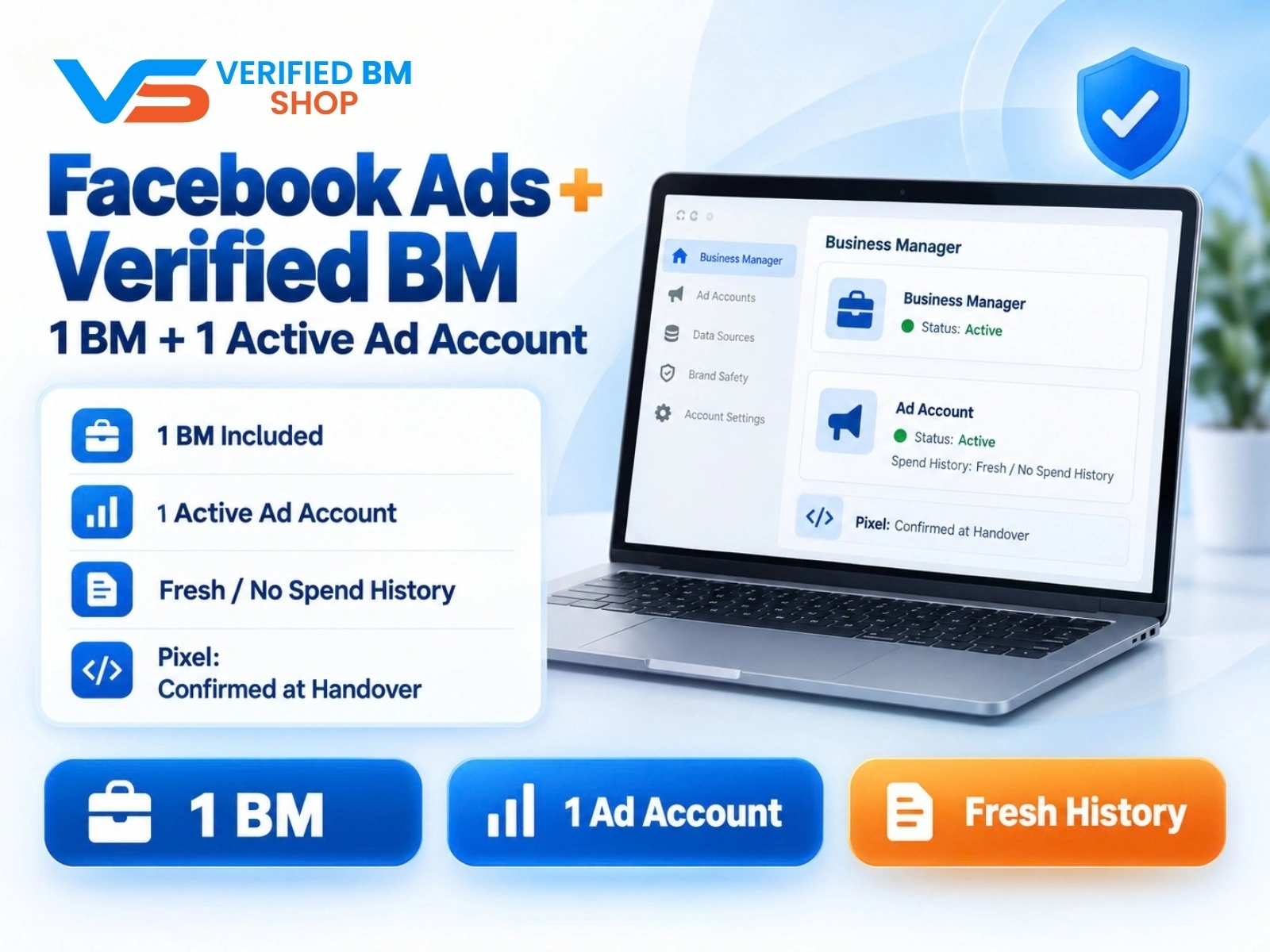
Facebook Ads Account + Verified BM Bundle
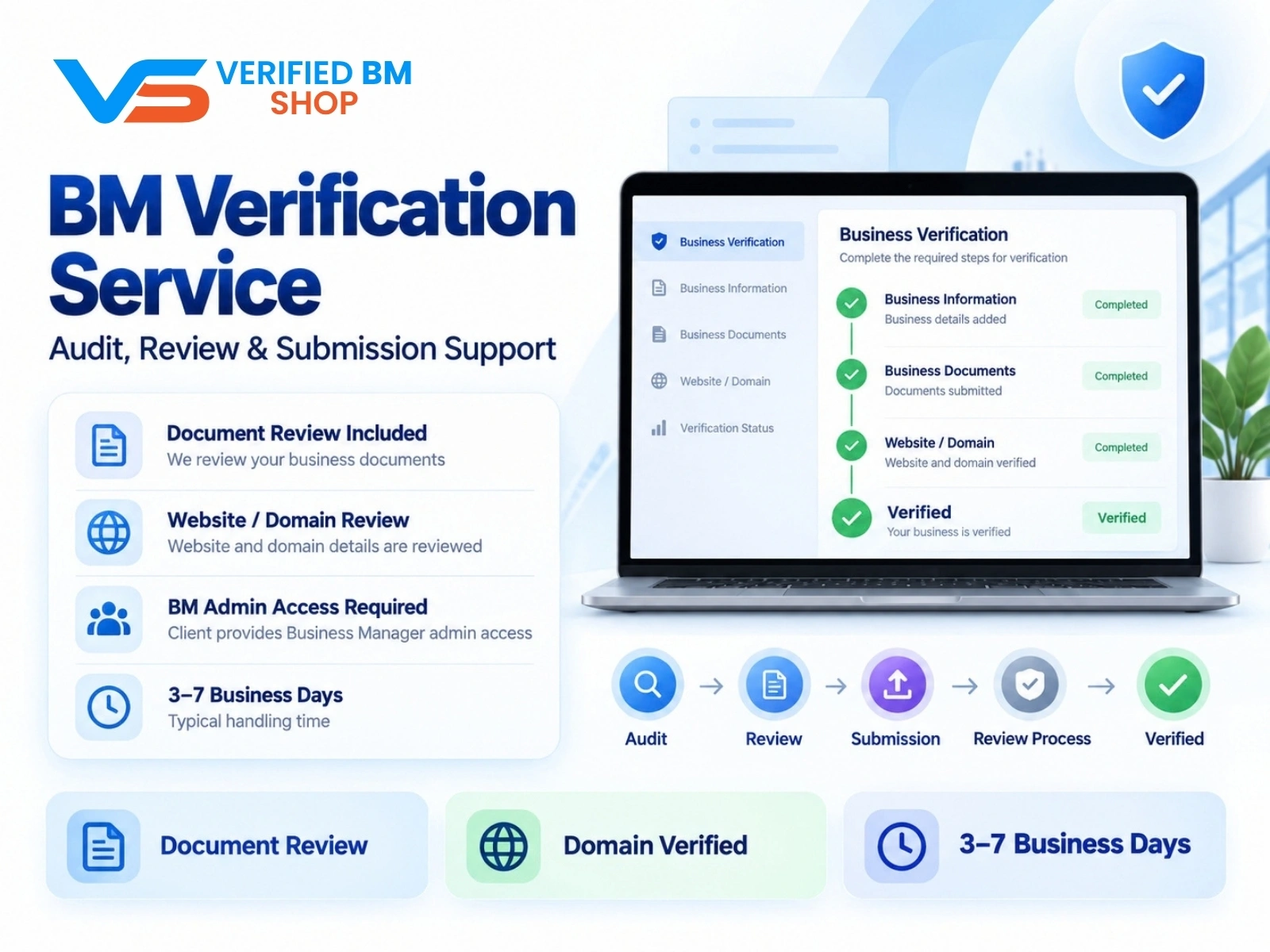
BM Verification Service
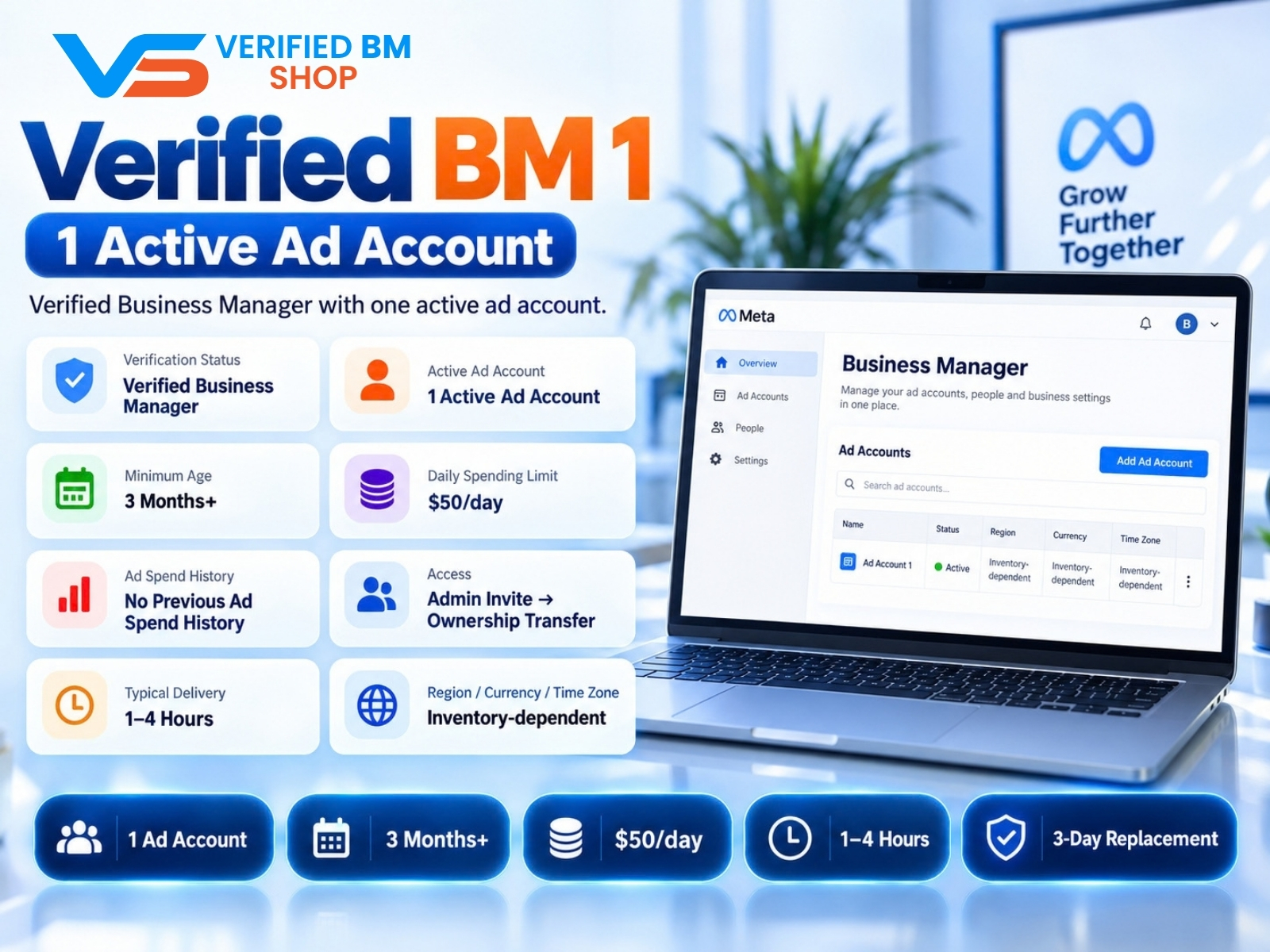
Verified BM 1 - Verified Meta Business Manager
Written by
Verified BM TeamThe VERIFIED BM SHOP editorial team shares real-world experience in buying and selling verified Business Managers, WhatsApp API accounts and advertising platforms.
Comments (0)
No comments yet. Be the first to share your thoughts!
Leave a Comment
Your email will not be published. All comments are moderated.