
Quick Summary
Learn how Meta assets work, how Business Manager organizes ownership and access, and how to add, connect, troubleshoot, and secure business resources.
Meta assets are business resources managed through Meta Business Manager. In some parts of its interface, Meta now calls Business Manager a business portfolio. Assets include Pages, Instagram accounts, ad accounts, datasets, catalogs, domains, apps, and WhatsApp Business Accounts.
Good asset management separates ownership from daily access. It also helps teams link ad, tracking, sales, and messaging tools while lowering common security risks.
What Are Meta Assets?
A Meta asset is a Page, account, data source, or other resource used for business work on Meta. Your business may own it, or it may have permission to use an asset owned by another business.
The difference matters. Ownership usually gives a business control over access and settings. Assigned access lets a person, agency, or partner use the asset without owning it.
For instance, a brand may own its Facebook Page and ad account. An agency may still get permission to create campaigns, manage ads, or view reports.
How Meta Assets Fit Into Business Manager
Business Manager gives businesses one place to organize resources and the people or businesses that use them. Meta uses terms such as business portfolio and business account in parts of its interface. Menu names can vary by account, product, and region.
Think of the structure as four layers:
Business portfolio: the container that groups a company’s Meta resources.
Assets: Pages, accounts, data tools, domains, catalogs, apps, and related resources.
People: staff members or contractors who receive access through their individual Facebook profiles.
Partners: outside businesses, such as agencies, that receive access through a business ID.
Business Suite supports daily work, such as publishing posts, managing messages, and reviewing results. For ownership, permissions, partner access, security, and asset links, Business Settings is usually the better choice.
Which Meta Assets Can You Manage in Meta Business Manager?
Available asset types depend on eligibility, account type, product setup, region, and Meta’s current rules. Common examples appear below.
Asset | What it does | Typical use |
|---|---|---|
Facebook Page | Represents a brand, company, or organization | Publishing, community management, and Page-based ads |
Instagram account | Connects an Instagram presence to business tools | Content, messages, insights, and Instagram ads |
Ad account | Holds campaigns, billing settings, audiences, and results | Creating and measuring paid campaigns |
Dataset or Meta Pixel | Receives events from websites, apps, or other supported sources | Conversion tracking, audience features, and event measurement |
Catalog | Stores products, services, or listings | Commerce features and product ads |
Domain | Helps establish control of a website domain | Brand protection, event setup, and web asset control |
App | Connects software to Meta products and developer tools | Login, API access, and custom integrations |
WhatsApp Business Account | Groups WhatsApp business phone numbers and related settings | Business messaging through supported WhatsApp products |
Meta may call a data source a dataset instead of a Pixel. A Pixel remains a common website event tool. Depending on the setup and available features, a dataset may support events from more than one source.
Meta Assets vs. Users, Partners, and Business Portfolios
These terms refer to different parts of Meta’s access model. Mixing them up can cause poor ownership choices or excess permissions.
Term | Meaning |
|---|---|
Business portfolio | The business container that organizes assets, people, and partner access. |
Asset | A resource managed or used for business activity. |
User or person | An individual Facebook profile invited to work with the business. |
Partner | Another business that receives access through its business ID. |
Employees and contractors who need direct access should use people access. Agencies or vendors that work from their own business portfolio should use partner access.
Ownership should stay with the brand or legal business that needs control of the asset. An agency can work on a client’s Page or ad account without owning it.
How to Find Your Meta Assets
Start in Meta Business Suite, or visit Meta Business and choose the right business portfolio. Next, open Business Settings and check areas such as Accounts, Data Sources, Brand Safety, and Business Assets.
For each asset, check its name, ID, owner, assigned people, assigned partners, and available permissions. Similar names can cause mix-ups, so record the IDs for ad accounts, datasets, catalogs, apps, and WhatsApp accounts.
If you cannot find an asset, make sure you chose the right business portfolio. Also check that your profile can view it.
How to Add or Claim a Meta Assets
Business Settings may show options to add, claim, or request access. Select the right option because each one has a different result.
Add or claim: Use this when the business should own the asset and Meta permits that ownership action.
Request access: Use this when another business owns the asset and should retain control.
Create new: Use this when your business needs a new Page, ad account, dataset, or catalog.
Connect: Use this when linking related assets, such as an Instagram account to a Page.
To add a Page or Instagram account, you may need suitable control of that account. One business portfolio can own an ad account while another business gets shared access.
Domains often need verification. Apps may need developer access and setup. WhatsApp Business Accounts may need business details, phone-number checks, and eligibility for the chosen product.
Do not claim an asset just because your team uses it. Confirm its owner first, and check whether another business already controls it.
How to Assign People and Partners to Assets
Open the relevant asset in Business Settings. Then choose the people or partners section, select the person or business, and grant only the access needed for the work.
A media buyer, for example, may need campaign and reporting access to an ad account. Full control of the business portfolio, Page settings, or payment details may not be needed.
Partner access can make agency work easier. Share the asset and chosen permissions with the agency’s business ID instead of adding each agency employee yourself.
For security, policy, or other account-specific reasons, Meta may limit invitations or access changes. If an invitation fails, read the notice and check any eligibility rules before trying again.
Understanding Meta Asset Permissions
Access levels differ by asset. Common levels range from task access to full control. Labels and available tasks may change as Meta updates its tools.
Access approach | Suitable for | Risk level |
|---|---|---|
Task access | Publishing, messages, ads, insights, or catalog work | Lower |
Partial control | Managers who need broader asset settings | Medium |
Full control | Trusted owners and senior administrators | Highest |
Follow least privilege: give each person only the permissions needed to do the job. Review access when someone changes roles or leaves the company.
For tracking work, a developer may need dataset or Pixel access but not billing access. A product manager may need catalog permissions without control of the ad account.
How Verified Business Status Supports Asset Management
Business verification means Meta reviews business details. It may ask for legal business information, contact details, and documents that match official or public records.
Selected products, developer features, WhatsApp services, or business actions may require verification. Verification does not grant every permission, remove policy duties, or guarantee approval for each feature.
Verification may help meet requirements for certain products or business actions. Asset ownership and access still need separate setup in Business Settings. Where needed, keep your legal name, website, contact details, and support documents consistent.
Read the comparison of verified and unverified Business Managers before deciding what your operation needs. If you need hands-on help, a BM Verification Service can assist with preparation, but Meta makes the final decision.
Connecting Meta Assets for Advertising and Tracking
Linked assets let your team use supported data and work steps across related tools. A Page and Instagram account may support ad delivery and content work. An ad account provides campaign control.
A properly set up Pixel or dataset may send website or other events to Meta for supported measurement and audience features. Availability depends on setup, permissions, privacy needs, consent, and current Meta product rules; see the Meta Pixel and Conversions API setup guide for implementation details.
Catalogs may link to commerce surfaces and product campaigns. Domains may support website control checks and event settings. Based on account type, region, and eligibility, a WhatsApp Business Account may link to registered phone numbers, supported messaging tools, and certain Meta advertising or customer-contact entry points.
Each link needs the right ownership or assigned permission. A connection may fail when assets belong to different portfolios, the user lacks control, or a required business check remains incomplete.
Common Meta Asset Problems and What They Mean
The asset is missing
The wrong business portfolio or Facebook profile may be in use. You may also lack permission. Search by asset ID and ask the owner to confirm your access.
The asset is unavailable
Another business may own the asset. Meta may also block a new claim because the asset already has an owner. Request access rather than trying to claim it again.
You cannot assign a person
The person may not have accepted the invitation. A conflicting role or unmet security rule may also cause the issue. Check two-factor authentication and existing access first.
The asset shows a restriction
Review a restricted asset through the reason and fix options shown in Meta’s account-quality or support interfaces. The cause may relate to policy, security, payment, identity, technical, or other account-specific issues; see Meta’s technical support and case guide for help preparing the needed details.
A connection keeps failing
Check ownership, admin rights, business verification needs, domain status, and the selected asset IDs. Remove old links only after confirming that active campaigns or integrations will not break.
Best Practices for Securing Meta Assets
Give full control only to the minimum number of trusted administrators needed to operate and recover the business portfolio, and review those assignments regularly.
Require two-factor authentication for everyone with business access.
Use individual profiles instead of shared Facebook logins.
Review people, partners, apps, and system users regularly.
Remove access as soon as a contract or job ends.
Record asset IDs, owners, key contacts, and recovery details securely.
Use separate roles for media buying, creative work, development, and billing.
Check unexpected emails and login prompts before approving them.
Set up two-factor authentication for agency Business Managers before inviting new users or partners. Security controls work best before an access problem starts.
Meta Asset Management Checklist
Choose the correct business portfolio.
List every Page, Instagram account, ad account, dataset, catalog, domain, app, and WhatsApp Business Account.
Record each asset’s owner and ID.
Remove duplicate or unused assets where appropriate.
Assign people by task, not convenience.
Give agencies partner access when they should not own client assets.
Connect only the assets needed for each campaign or workflow.
Confirm domain, dataset, catalog, app, and WhatsApp requirements.
Turn on two-factor authentication and review administrator access.
Keep business details and verification records current.
Document errors before opening a Meta support case.
A clear asset map makes ownership, access, and troubleshooting easier to manage. If you need help reviewing a setup, contact VERIFIED BM SHOP for guidance on organizing a Business Manager around your assets and advertising needs.
Frequently Asked Questions
Quick answers to the questions buyers ask most.
What are Meta assets?
Where can I view my business's Meta assets?
How do I add a Facebook Page or Instagram account to Meta Business Manager?
What is the difference between owning a Meta asset and having access to it?
How do I give someone access to Meta assets without sharing my password?
Why can't I add or claim a Meta asset?
What does business verification mean for Meta assets?
How do I remove a person or partner from Meta asset access?
How this helps verified BM buyers
Apply this guidance when buying verified Business Managers or WhatsApp Business API assets to reduce policy risk, improve account stability, and scale campaigns with cleaner operational workflows.
Compare Verified BM options · Next steps: compare products in the Shop, review implementation details in FAQ, and contact support from the Contact page.
Recommended for You
Hand-picked from our shop — delivered fast after payment.
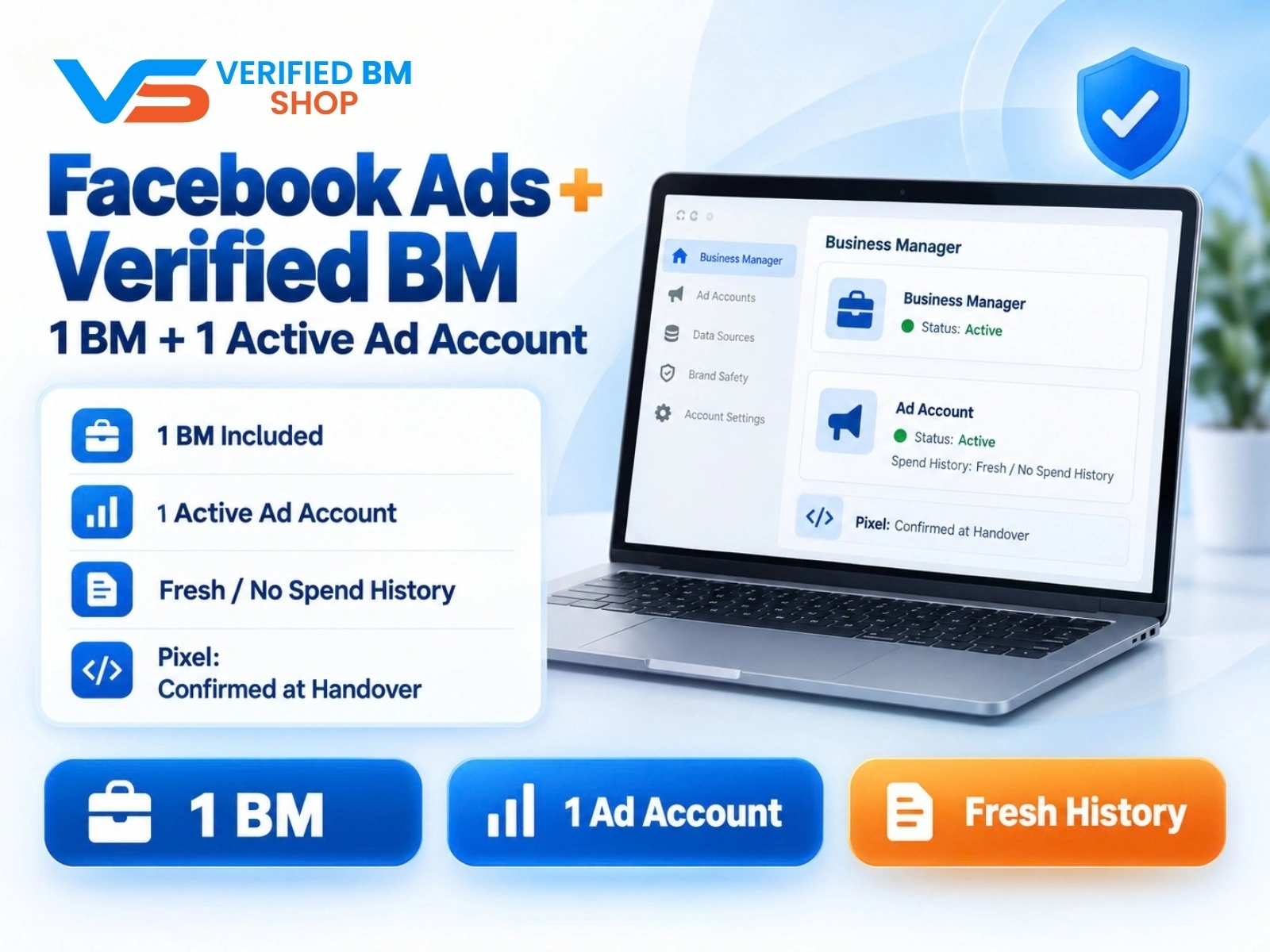
Facebook Ads Account + Verified BM Bundle
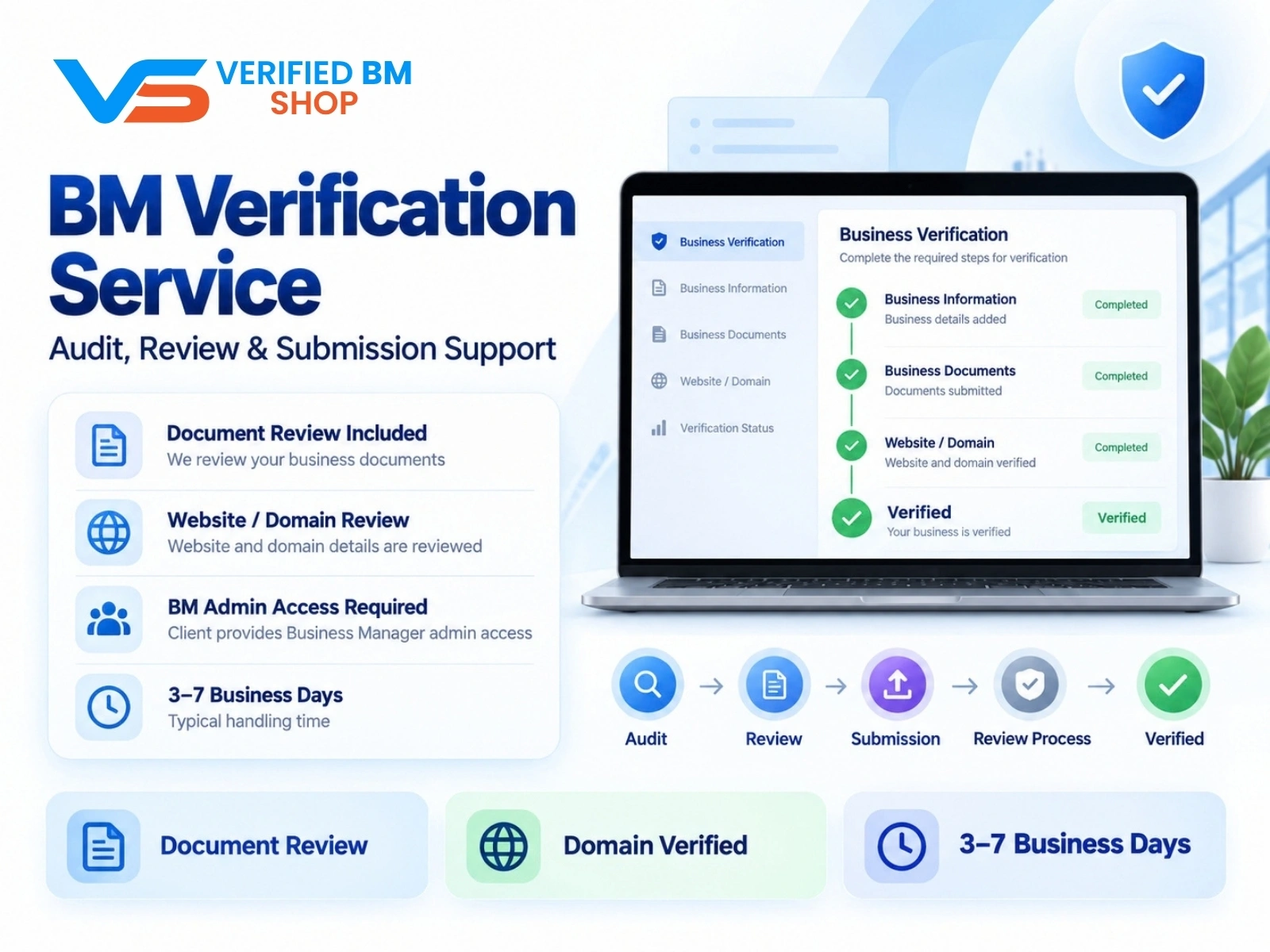
BM Verification Service
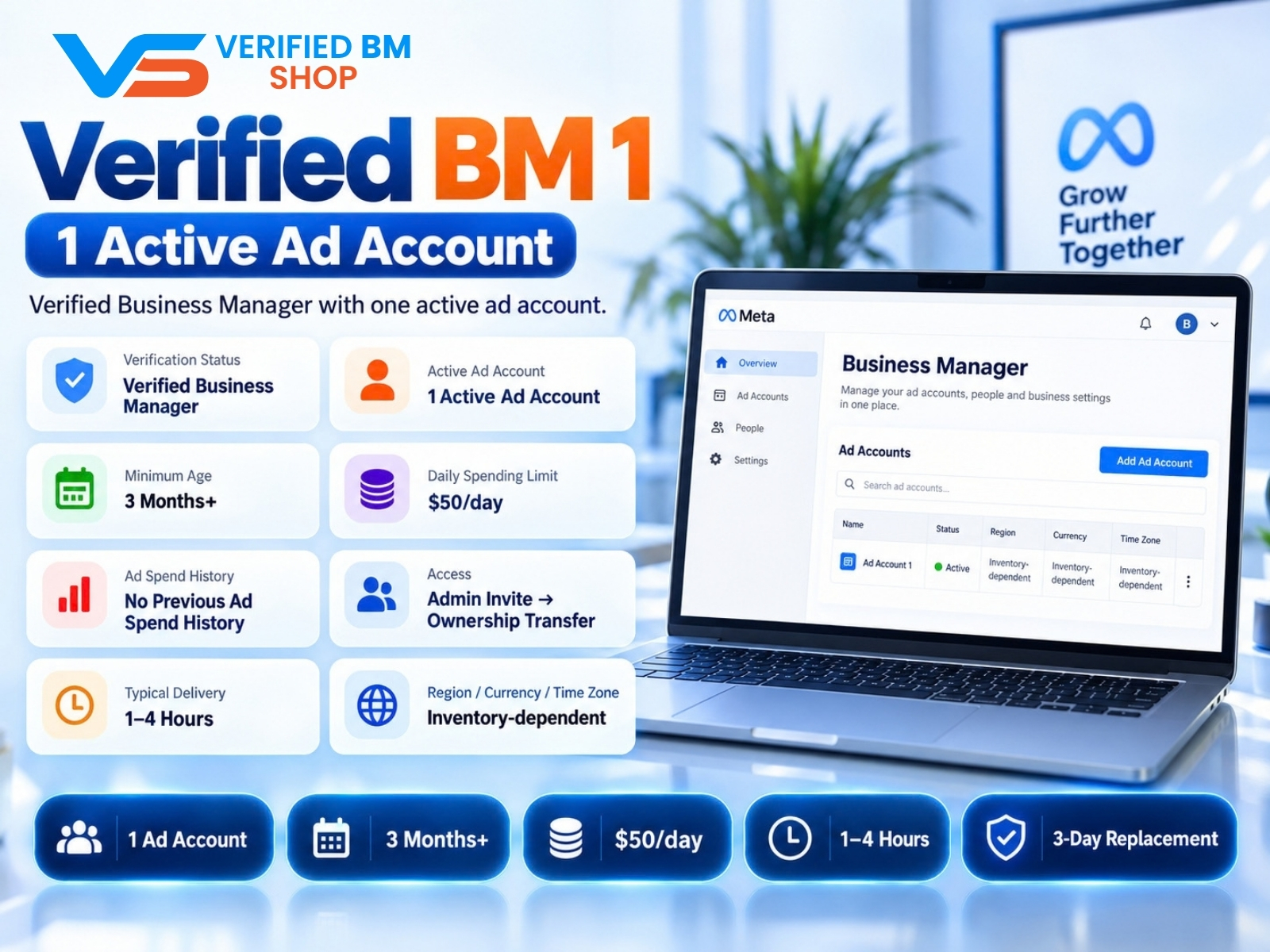
Verified BM 1 - Verified Meta Business Manager
Written by
Verified BM TeamThe VERIFIED BM SHOP editorial team shares real-world experience in buying and selling verified Business Managers, WhatsApp API accounts and advertising platforms.
Comments (0)
No comments yet. Be the first to share your thoughts!
Leave a Comment
Your email will not be published. All comments are moderated.