
Quick Summary
Understand how Facebook agency account rental works, what access and billing arrangements it may involve, the risks to your data and campaigns, and how to compare safer alternatives.
Facebook agency account rental is a business deal. One company runs ads through assets owned by another company. This can provide a different billing setup, ad support, or access to an active ad account. However, ownership does not change, and Meta can still review the campaigns.
Spending power is not the only concern. Find out who owns the Business Portfolio and ad account. Check who controls billing and security, where data sits, and what happens when the deal ends.
What Is a Facebook Agency Account Rental?
Under this setup, an agency or account provider runs campaigns through its Meta business assets for another advertiser. The offer may include an ad account, Business Portfolio, billing help, account guidance, or campaign management.
Meta uses terms such as Business Portfolio, ad account, user access, and partner access. “Agency account rental” is a market term, not the name of a standard Meta product.
Some providers give your business partner access to an ad account they own. Others provide access to a larger Business Portfolio with several assets. Ownership, rights, billing, data access, and risk can differ across these models.
Rental is not the same as buying
Arrangement | Who usually owns the asset? | What happens when access ends? |
|---|---|---|
Agency account rental | The agency or provider | Your access may end, and campaigns may stop |
Self-owned ad account | Your business | You retain the asset, subject to Meta’s rules |
Agency-managed advertising | Your business or the agency, depending on the contract | The agency removes access or hands over agreed assets |
Asset transfer | Ownership may change only if the setup and Meta’s rules permit it | Transfer terms must be documented and handled securely |
Paying for access does not prove that ownership changed. The provider should name each asset’s owner and list the rights you will receive.
How Facebook Agency Account Rental Usually Works
First, the provider finds an ad account or Business Portfolio that it says can support your campaign. Next, it adds your business, employee, or agency as a partner or user through Meta’s business tools.
Campaign access may not include admin control. A safer setup uses real user profiles with two-factor authentication. Never share your personal Facebook password.
Once access starts, you may create and track campaigns yourself. You might also send ads to the provider for review or hire the agency to run them. The contract should state who may change budgets, payment details, audiences, domains, and other settings.
Billing can work in several ways. You may pay Meta, repay the provider, use a payment method controlled by the provider, or pay a deposit and service fee. Each option creates different risks for records and access. The deal should state payment dates, receipts, taxes, currency, spending limits, and refund terms.
Before reviewing an offer, read how Meta ad accounts handle setup, access, and billing. This guide can help you spot normal business rights and unsupported claims from sellers.
Renting an Agency Account vs Using Your Own Meta Ad Account
Factor | Rented agency account | Your own account |
|---|---|---|
Ownership | Usually belongs to the provider | Belongs to your business |
Setup speed | May be faster if suitable access is already available | Requires your own setup and any applicable checks |
Spending capacity | Depends on Meta’s controls and the provider’s arrangement | Depends on Meta’s controls, payment history, and account signals |
Billing control | May be shared or controlled by the provider | Usually controlled by your business |
Data continuity | Requires an exit plan before termination | Provides more direct control over long-term records |
Support | May include provider assistance | Self-service, agency, or Meta support |
Your own account needs more planning, but it gives your business a clearer record of ownership and billing. A rental may fit a short test or managed campaign. It is not always a sound long-term asset plan.
Why Businesses Consider Renting an Agency Account
Advertisers often consider this model after a setup, payment, or work-flow problem. Common reasons include:
They want to launch campaigns while their own business setup is still being completed.
Their team needs agency support with campaign review or account operations.
They want a separate billing structure for a client, region, or brand.
They want to test a new market without changing their main ad account.
Their current account has a spending limit, payment problem, or unresolved restriction.
An agency already has processes for handling advertising for multiple businesses.
These reasons may help. However, a rented account does not ensure higher spending limits, ad approval, steady access, or a successful appeal. Meta may review the advertiser, landing page, payment method, business details, and campaign content.
What You Actually Control—and What You Do Not
Assets you may control
Your rights may let you create campaigns, edit ads, view reports, manage audiences, or link approved data sources. The role assigned to your profile sets the exact rights.
You may also control your website, creative files, product feed, customer data, pixel or dataset setup, and conversion setup. Even so, these assets may link to a Business Portfolio your company does not own.
Assets the provider may control
The provider may keep control of the ad account, billing method, Business Portfolio, Page, catalog, pixel or dataset, domain settings, and admin roles. It may also control account history, some review messages, and the reply process for restrictions.
Ask whether your business can keep its pixel or dataset, audiences, catalogs, reports, and campaign records after the deal ends. If not, view the service as temporary media placement, not a lasting account solution.
Main Risks of Facebook Agency Account Rental
Loss of access or sudden termination
A provider may remove your access, lose access to its assets, stop trading, or end the deal. As a result, campaigns may pause without warning even when your business followed the rules.
Unclear ownership
Sales language can blur the gap between access and ownership. A partner role does not transfer ownership of an ad account, Page, pixel, catalog, dataset, or Business Portfolio.
Payment disputes
Deposits, failed cards, currency changes, taxes, and extra spending can cause disputes. Campaigns may pause if the provider’s payment method fails or your balance remains unpaid.
Policy and account risk
Your ads must still meet Meta’s ad standards and other rules that apply. A rented account does not excuse false claims, restricted products, weak landing pages, copyright breaches, or poor data care.
Past use by another advertiser may affect later reviews or restrictions. Ask how the provider checks past activity and shares policy notices.
Data and privacy exposure
Account access can expose customer lists, conversion data, product feeds, and performance reports. Give only the access needed. Also ask how the provider stores, protects, and deletes business data.
Meta Verification, Access, Billing, and Policy Requirements
Meta may ask for business details, identity records, domain proof, payment data, or other documents during business and account checks. Needs can vary by business, region, product, and review stage.
Verification does not ensure ad approval or continued account access. It also does not let a provider misstate your business, hide the real advertiser, or bypass Meta checks.
Use true business details, real user profiles, secure roles, and approved payment methods. Do not share personal logins or ask a provider to avoid identity, payment, spending, or policy reviews.
For businesses building their own base, this Meta Business Manager verification document checklist explains records that may help. It does not ensure approval.
Facebook Agency Account Rental Due-Diligence Checklist
Check these points before you pay a deposit or give access to your assets:
Provider identity: Confirm the legal business name, contact details, service terms, and support hours.
Authority: Ask the provider to confirm that it may grant the access on offer.
Asset ownership: List the owner of each ad account, Business Portfolio, Page, pixel or dataset, catalog, and domain.
Permissions: Record the role you receive and the actions it allows.
Billing: Confirm deposits, fees, taxes, currency, payment timing, spending caps, receipts, and refund rules.
Replacement terms: Check what happens if access fails, the account is disabled, or the provider cannot deliver.
Data exit: Confirm how campaigns, reports, audiences, pixels or datasets, and catalogs will be handled after termination.
Security: Require two-factor authentication and avoid shared passwords.
Reporting: Agree on spend reports, receipts, change logs, and access records.
Compliance: Confirm that your business remains responsible for accurate campaign claims and product information.
Put these points in a written agreement. Verbal claims about “special status,” guaranteed approval, or permanent access are not enough.
Questions to Ask a Rental Provider Before Paying
Who owns the ad account and Business Portfolio today?
Will I receive partner access, user access, or administrative access?
Can I connect my own Page, domain, pixel or dataset, catalog, and conversion tools?
Who controls the payment method and receives billing notices?
What fees apply when spending rises or a payment fails?
What records will I receive for spending, refunds, and account changes?
What happens to active campaigns if the agreement ends?
Can I export reports and retain my business data?
What is the replacement process, and what does it exclude?
How does the provider handle a policy notice or account restriction?
Be careful if the seller will not explain ownership, asks for your password, promises protection from restrictions, or cannot give clear business terms.
How to Protect Your Business Assets and Data
Keep your main business assets in a Business Portfolio controlled by your company. Give the provider only the access needed for its task. Remove that access when the work ends.
Use separate staff roles, strong passwords, and two-factor authentication. The guide to two-factor authentication for agency Business Managers covers a key part of this plan.
Keep copies of campaign reports, invoices, creative files, product feeds, audience permissions, and conversion settings. Track changes to budgets, payment details, domains, and admin roles.
Do not put sensitive customer data in an account controlled by a provider without checking the lawful basis, access rules, retention terms, security steps, and deletion process. Your privacy duties remain with your business.
Safer Alternatives to Renting an Agency Account
Build and verify your own Business Portfolio
This gives your company direct control of its business assets. It may take more time, but it supports clearer records, billing, access control, and long-term continuity.
Businesses comparing available setups can review the Verified BM collection. Before buying any service or asset, check the ownership, access, replacement, refund, and security terms.
Hire an agency without handing over ownership
A legitimate agency can run campaigns through partner access while your business keeps its Business Portfolio, Page, pixel or dataset, catalog, and data. Put access limits, reporting duties, and handover needs in the contract.
Resolve your existing account issue
If your account is restricted, renting another account may add risk without fixing the cause. Review common reasons Meta ad accounts get restricted. Then use Meta’s official review and support channels when available.
When to Use Verification or Meta Support Instead
Consider verification help when your business details are real but the process is unclear, documents need review, or your setup needs an audit. Such help cannot replace Meta’s own decision.
Use Meta support for billing errors, stolen access, disabled assets, rejected reviews, or technical faults. Keep case numbers, screenshots, receipts, and exact error messages.
A provider can help organize information. It should not promise a set result or claim private authority over Meta’s review systems.
Final Decision: Is a Facebook Agency Account Rental Right for You?
Rental may suit a short campaign when the provider is clear, access is documented, and your business accepts limited ownership. It is less suitable for a core brand that needs lasting control of data, billing, audiences, and account history.
Use this test before signing:
Choose rental only when the business need is specific and the exit plan is written.
Choose agency-managed advertising when you need expertise but want your company to retain its core assets.
Choose a self-owned setup when long-term control, clean records, and direct billing matter most.
Review the provider’s terms of service, replacement rules, and refund policy before paying. A careful choice protects your ad budget, business identity, customer data, and future campaign options.
Frequently Asked Questions
Quick answers to the questions buyers ask most.
What is a Facebook agency account rental?
How much does it cost to rent a Facebook agency account?
What are the main risks of renting a Facebook advertising account?
Is renting a Facebook agency account allowed by Meta?
Do I need to verify my business before advertising on Meta?
What should I check before choosing a Facebook agency account provider?
Can I keep my pixel, audiences, and campaign data if I stop renting the account?
What are safer alternatives to renting a Facebook agency account?
How this helps verified BM buyers
Apply this guidance when buying verified Business Managers or WhatsApp Business API assets to reduce policy risk, improve account stability, and scale campaigns with cleaner operational workflows.
Next steps: compare products in the Shop, review implementation details in FAQ, and contact support from the Contact page.
Recommended for You
Hand-picked from our shop — delivered fast after payment.
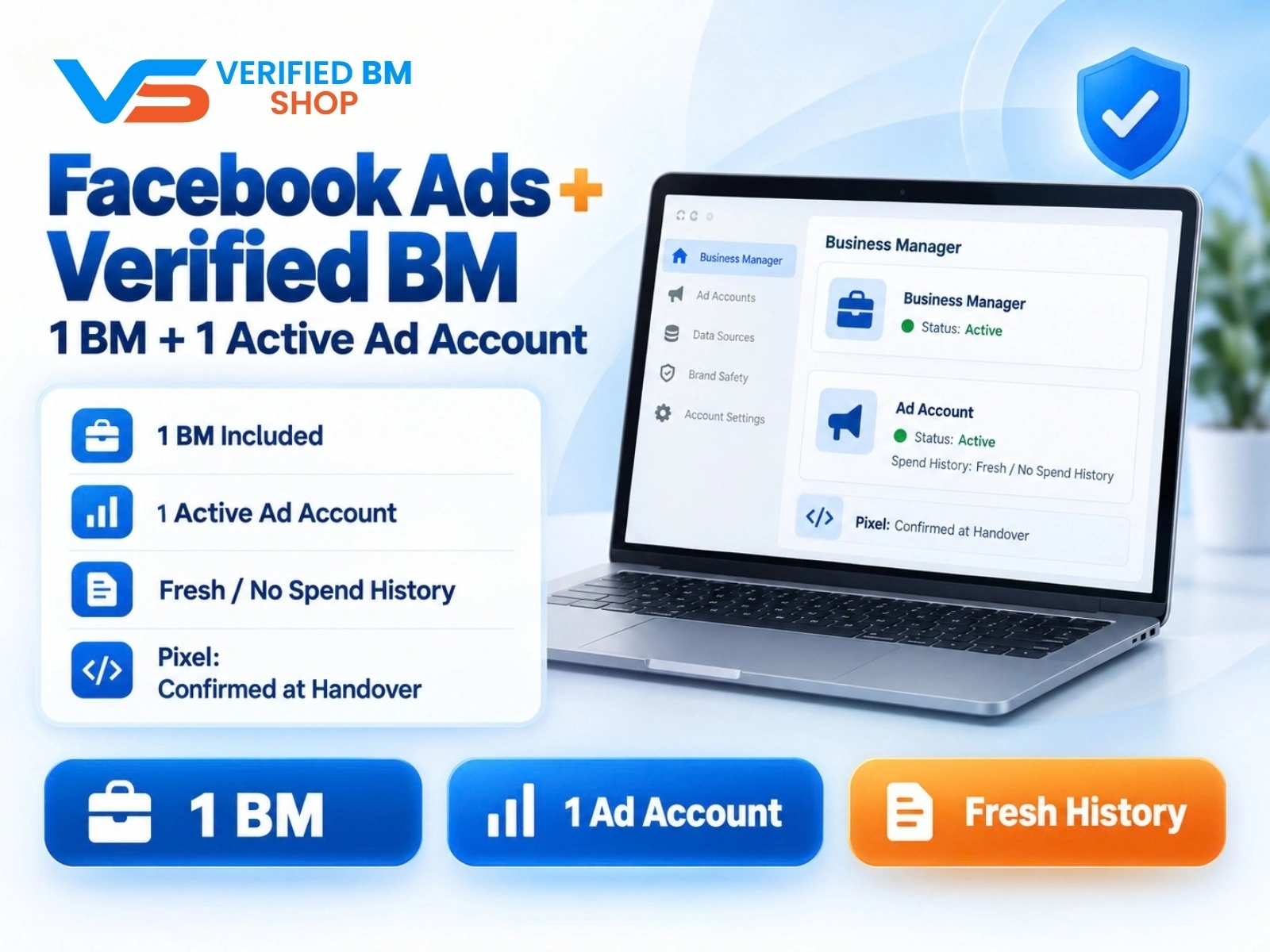
Facebook Ads Account + Verified BM Bundle
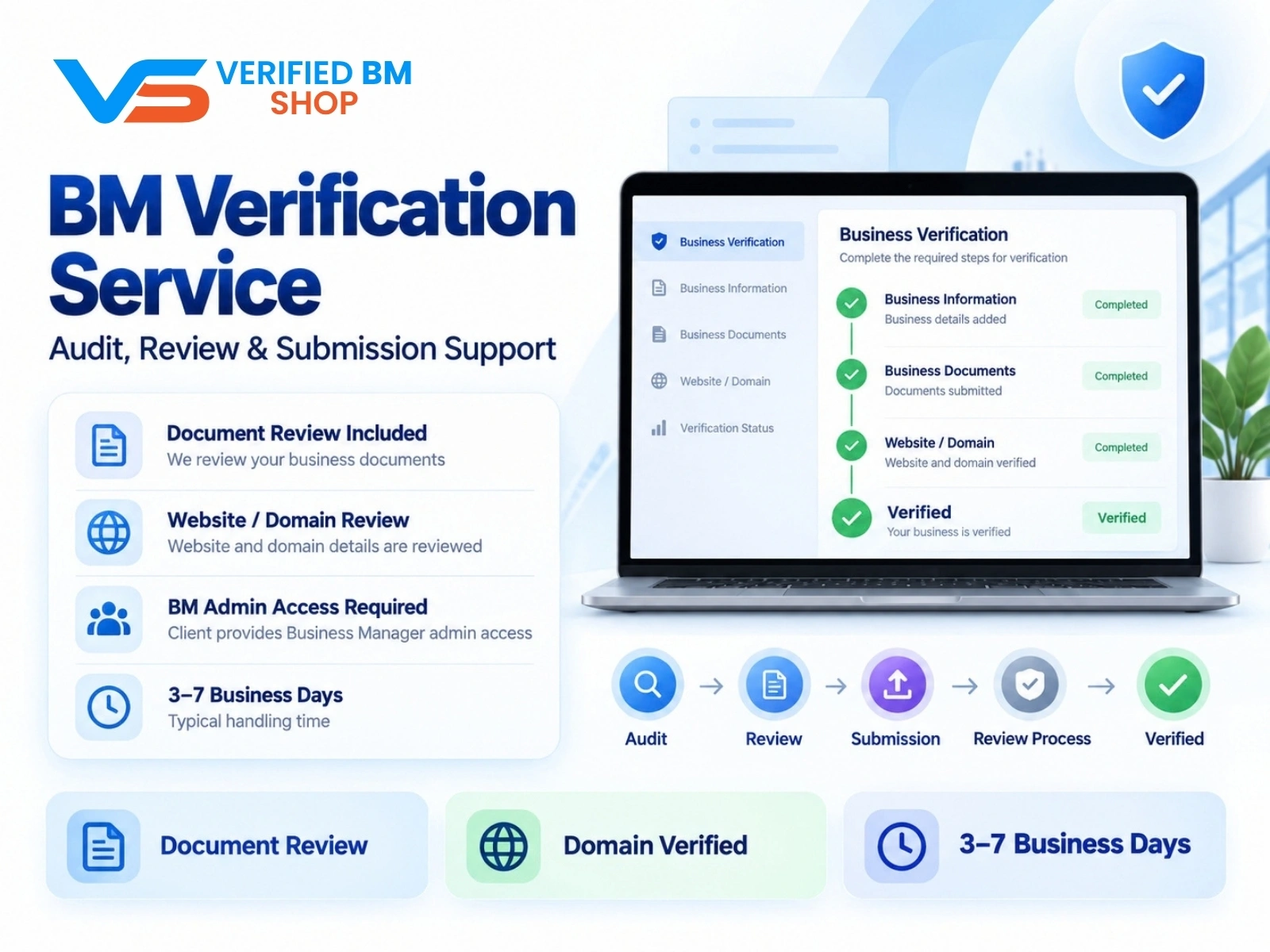
BM Verification Service
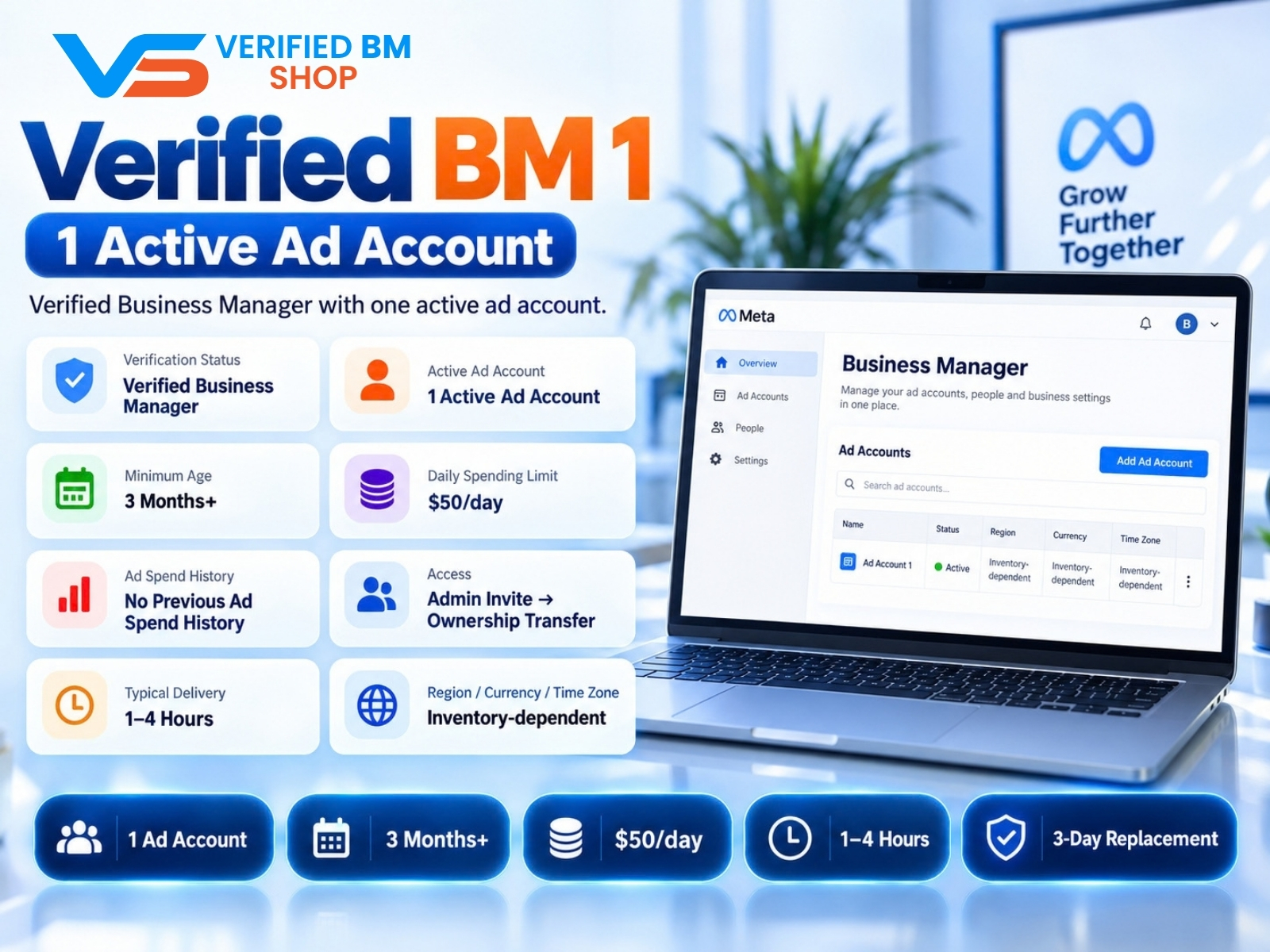
Verified BM 1 - Verified Meta Business Manager

Written by
Verified BM TeamThe VERIFIED BM SHOP editorial team shares real-world experience in buying and selling verified Business Managers, WhatsApp API accounts and advertising platforms.
Comments (0)
No comments yet. Be the first to share your thoughts!
Leave a Comment
Your email will not be published. All comments are moderated.