

Quick Summary
Learn how Meta ad accounts connect to business portfolios, how ownership and permissions work, and which setup fits advertisers, agencies, and ecommerce teams.
Meta ad accounts are workspaces for making, funding, running, and measuring ads on Facebook and Instagram. They can link to a Meta business portfolio and support work by a business, advertiser, agency, or approved partner.
The right setup depends on ownership, payment, brands or clients, and team access. Where available, one advertiser may use a personal ad account. For long-term work, a business-owned setup may give a team a clearer structure.
What Is a Meta Ad Account?
A Meta ad account holds the settings and activity for paid campaigns on Facebook and Instagram. It may include campaigns, ad sets, ads, payment details, billing history, spend controls, reports, and account status.
Each account has its own ID, currency, time zone, payment setup, and access settings. These details can affect billing and reports. Check them when you create or choose an account.
An ad account is not a Facebook profile, Facebook Page, or business portfolio. Instead, it is the ad workspace that uses those assets to build and run campaigns.
Meta Ad Account vs. Business Manager vs. Facebook Profile
Asset | Main purpose | Typical owner or user |
|---|---|---|
Facebook profile | Provides a person’s login and identity | An individual team member |
Meta Business Manager or business portfolio | Organises business assets, people, partners, and permissions | A company, agency, or organisation |
Meta Business Suite | Provides tools for Pages, messages, content, and some advertising tasks | Businesses and their teams |
Ad account | Creates, funds, delivers, and measures paid campaigns | A business, advertiser, or agency |
Meta has moved some screens and labels to business portfolio. Still, many users call it Business Manager. Menu names and options may vary by account, region, and Meta product.
Do not make one person’s profile the company’s only access route. A business portfolio with more than one trusted admin can help keep access. However, the team must maintain permissions and recovery settings.
What You Can Do With a Meta Ad Account
With the right access and a supported payment setup, an ad account can run campaigns for approved products or services. Common tasks include:
Creating campaigns, ad sets, and ads.
Choosing objectives, audiences, placements, budgets, and schedules.
Connecting Pages, Instagram accounts, catalogs, pixels, and other business assets.
Checking delivery, spend, conversions, and campaign results.
Managing payment methods, invoices, receipts, and spending controls.
Sharing access with employees, agencies, contractors, or approved partners.
Tracking assets have their own settings and permissions. For setup details, see this Meta Pixel and Conversions API setup guide.
Types of Meta Ad Account Setups
Personal ad account
A personal ad account links to one person’s Facebook profile. Where available and suitable, it may work for a freelancer or small advertiser running a limited campaign.
That person may control ownership and recovery. As a result, the setup can be hard to manage when several people need access. Never share a personal login. Use Meta’s permission tools instead.
Business-owned ad account
A business-owned ad account links to a company’s business portfolio. The business can set roles, connect Pages and tracking assets, and remove access when staff or vendors leave.
This setup may suit ecommerce brands, local companies, and advertisers building a long-term in-house operation. It still requires accurate ownership records, suitable permissions, and policy compliance.
Agency or partner-managed setup
An agency may use its own ad account or request access to a client-owned account. Client-owned accounts usually keep billing, data, and ownership with the client. An agency-owned setup may suit some managed-service relationships.
Before work starts, agree on payment, data access, campaign ownership, and account handover. Use business-to-business access instead of sharing passwords.
How to Create or Add a Meta Ad Account
Meta’s interface changes over time. Usually, the process starts with the business portfolio that should own or manage the account.
Open Meta Business Suite or Business Settings.
Choose the relevant business portfolio. Then open Accounts, followed by Ad accounts.
Select Add. Choose whether to create an account, add an account you own, or request access to another account.
For a new account, enter its name, time zone, and currency.
Assign the needed people or partner. Then add a payment method when Meta requires one.
Check the account status before launching a campaign.
Meta may limit how many ad accounts a business can create or hold. Availability and limits vary by account and may change. Check the options and requirements in the current Business Settings interface.
Adding an account you do not own is not the same as taking ownership. Request access only after the owner approves the relationship and the setup follows Meta’s current policies.
Meta Ad Account Roles and Access Permissions
Ad account roles control what each person can do in the ad workspace. Meta often uses admin, advertiser, and analyst roles. Some accounts may show newer task-based permission screens.
Role | Typical access | Best use |
|---|---|---|
Admin | Manage ads, account settings, payment options, and user access | Owners and trusted senior operators |
Advertiser | Create and edit ads, view performance, and use approved payment settings | Media buyers and campaign managers |
Analyst | View ads and reporting data | Clients, finance staff, and reporting teams |
Give each person only the access needed for the job. Keep enough trusted admins to manage recovery and permissions. Avoid giving admin rights to every contractor.
Check inactive users and partner access often. Also, require two-factor authentication for admins and staff who handle billing. This two-factor authentication guide for agency Business Managers covers the security basics.
Billing, Payment Methods, and Spending Limits
Meta ad accounts need a supported payment method or an approved invoicing setup. Options vary by country, currency, business type, account settings, and eligibility.
Meta may charge a payment method when spend reaches an account billing threshold or on a set billing date. Thresholds and charge dates can vary or change with Meta’s account and payment rules. Do not treat them as guaranteed spending capacity.
Account spending limits, campaign budgets, daily budgets, and payment thresholds have different roles. A spending limit can pause delivery after the account reaches its set amount. A failed payment can stop ads before that point.
Use a payment method owned or approved by the business.
Keep billing details consistent with the business and payment provider.
Watch for failed charges, expired cards, and bank declines.
Set campaign budgets before launch and check account-level controls.
Keep receipts and invoices for finance and tax records.
For teams that handle many accounts, this guide explains how to manage ad spend and billing cycles across multiple accounts.
Meta Ad Account Verification and Business Manager
Business verification checks information about an organisation through Meta’s review process. Meta may ask for legal business details, contact information, domain proof, or official documents.
Verification does not guarantee ad approval, higher spending limits, better delivery, or protection from enforcement. It records an organisation through Meta’s review process. Ownership control and access still depend on correct assets, permissions, and compliance.
Give Meta accurate, matching information and any documents it asks for. Incomplete or conflicting submissions may need more review. Current requirements can change. For a practical review of verification, account history, platform limits, and handover details, see our guide to evaluating verified Business Manager setups.
Businesses that want a structured ownership model can review the Verified BM category. Check any purchase against Meta’s current terms, ownership rules, and account eligibility before use.
Why Meta Ad Accounts Get Restricted
Meta may restrict or disable an account after policy violations, suspicious activity, payment problems, identity concerns, or unusual account behaviour. Ads, Pages, domains, products, and business portfolios may also face separate restrictions.
Possible concerns include policy violations, banned products or claims, misleading or broken landing pages, intellectual-property issues, payment problems, suspicious activity, and false or hidden business information. Restrictions depend on Meta’s review and its policies.
Do not create replacement accounts to avoid enforcement. Check the notice in Account Quality, fix real issues, and use Meta’s review path when one is available. See this guide to why Facebook ad accounts get restricted for a focused explanation.
How to Keep a Meta Ad Account in Good Standing
Advertise products, claims, and offers that follow Meta’s advertising policies.
Keep landing pages clear, working, and consistent with the ad.
Use accurate business details and an approved payment method.
Limit admin access and remove former staff promptly.
Use two-factor authentication for key profiles.
Plan major changes. Do not switch owners, cards, domains, and locations at once without a clear business reason.
Check Account Quality and billing alerts often.
A verified business still needs compliant ads and sound account practices. Verification supports business records; it does not replace policy compliance.
How to Choose the Right Meta Ad Account Setup
Your situation | Practical starting point |
|---|---|
One person testing a small campaign | Personal account, if available, eligible, and used only by that person |
One established brand with an in-house team | Business portfolio and business-owned ad account |
Several brands or client accounts | Separate ownership with partner access and clear billing rules |
Agency managing many campaigns | Business portfolio with controlled administrator access and account capacity confirmed in Meta’s interface |
Business needing structured documentation and multiple accounts | Business verification where required or appropriate, subject to Meta review and eligibility |
Base capacity on current business needs, not on an expectation of unrestricted growth. A larger setup still needs valid ownership, compliant ads, payment discipline, and careful access control.
Meta Ad Account Checklist Before You Start Advertising
Confirm who legally owns the business portfolio and ad account.
Check the account currency and time zone before spending.
Assign only the roles each person needs.
Connect the correct Page, Instagram account, domain, and tracking assets.
Add an approved payment method and confirm billing details.
Review Account Quality for restrictions or pending checks.
Read the current Meta advertising policies for your product category.
Record admin contacts and keep a safe recovery plan.
Test a small, compliant campaign before raising spend.
Final Takeaway
Meta ad accounts handle campaign creation, billing, delivery, and reporting. Business Manager or a Meta business portfolio manages ownership, people, partners, and linked assets. A Facebook profile provides a person’s login.
Where available, a personal setup may suit one advertiser. Brands, agencies, and ecommerce teams often need a business-owned account with controlled access. The right structure depends on ownership, billing, permissions, and current Meta eligibility.
If you need several active accounts, review Verified BM 3, Verified BM 5, or Verified BM 10. Before using any supplied account or business setup, confirm ownership, access, billing, replacement terms, and compliance with Meta’s current policies.
Frequently Asked Questions
Quick answers to the questions buyers ask most.
How do I set up a Meta ad account for my business?
How can I give an agency or employee access to a Meta ad account?
How does billing work for Meta ad accounts?
Does Meta require business verification for an ad account?
How this helps verified BM buyers
Apply this guidance when buying verified Business Managers or WhatsApp Business API assets to reduce policy risk, improve account stability, and scale campaigns with cleaner operational workflows.
Next steps: compare products in the Shop, review implementation details in FAQ, and contact support from the Contact page.
Recommended for You
Hand-picked from our shop — delivered fast after payment.
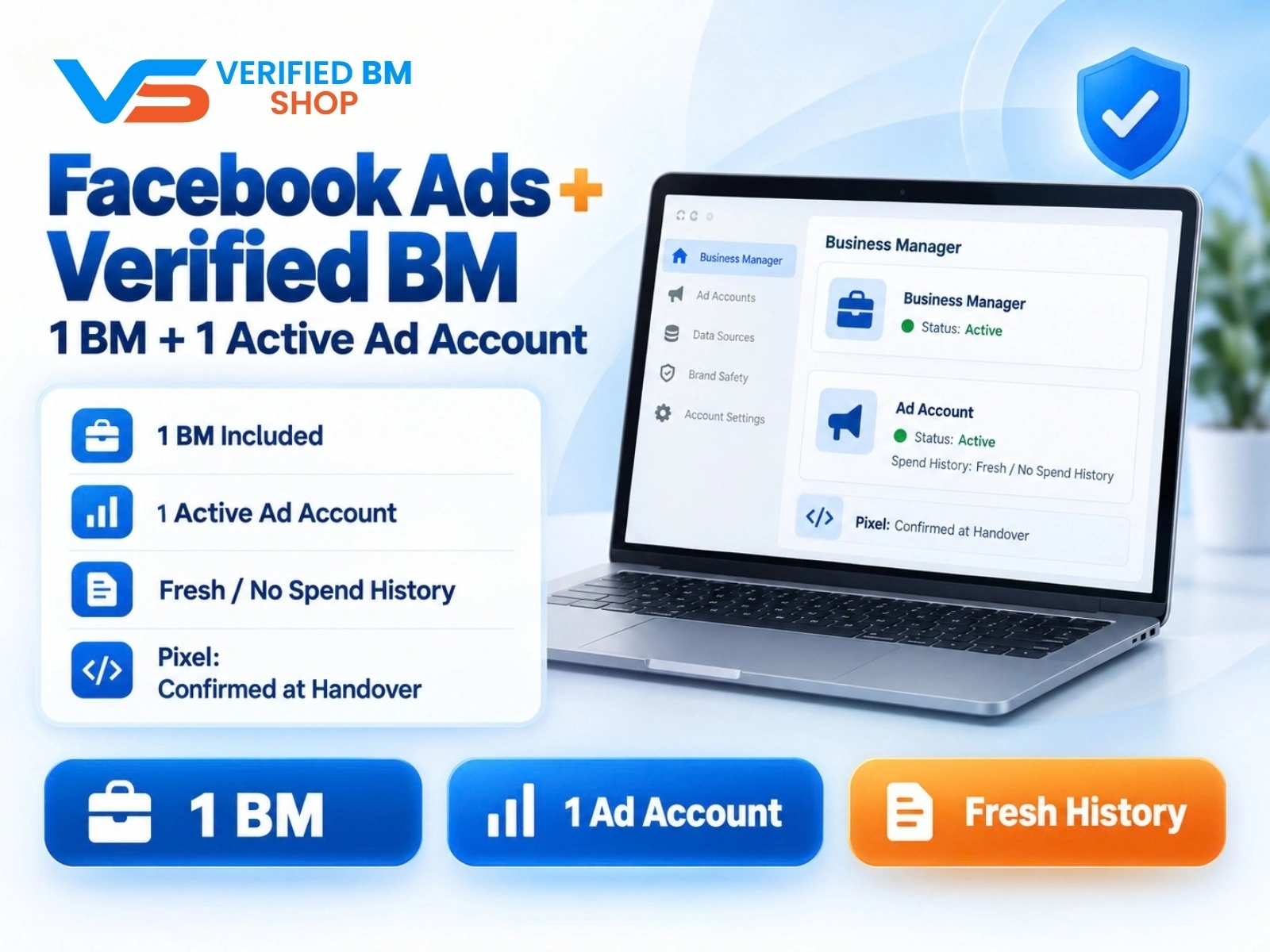
Facebook Ads Account + Verified BM Bundle
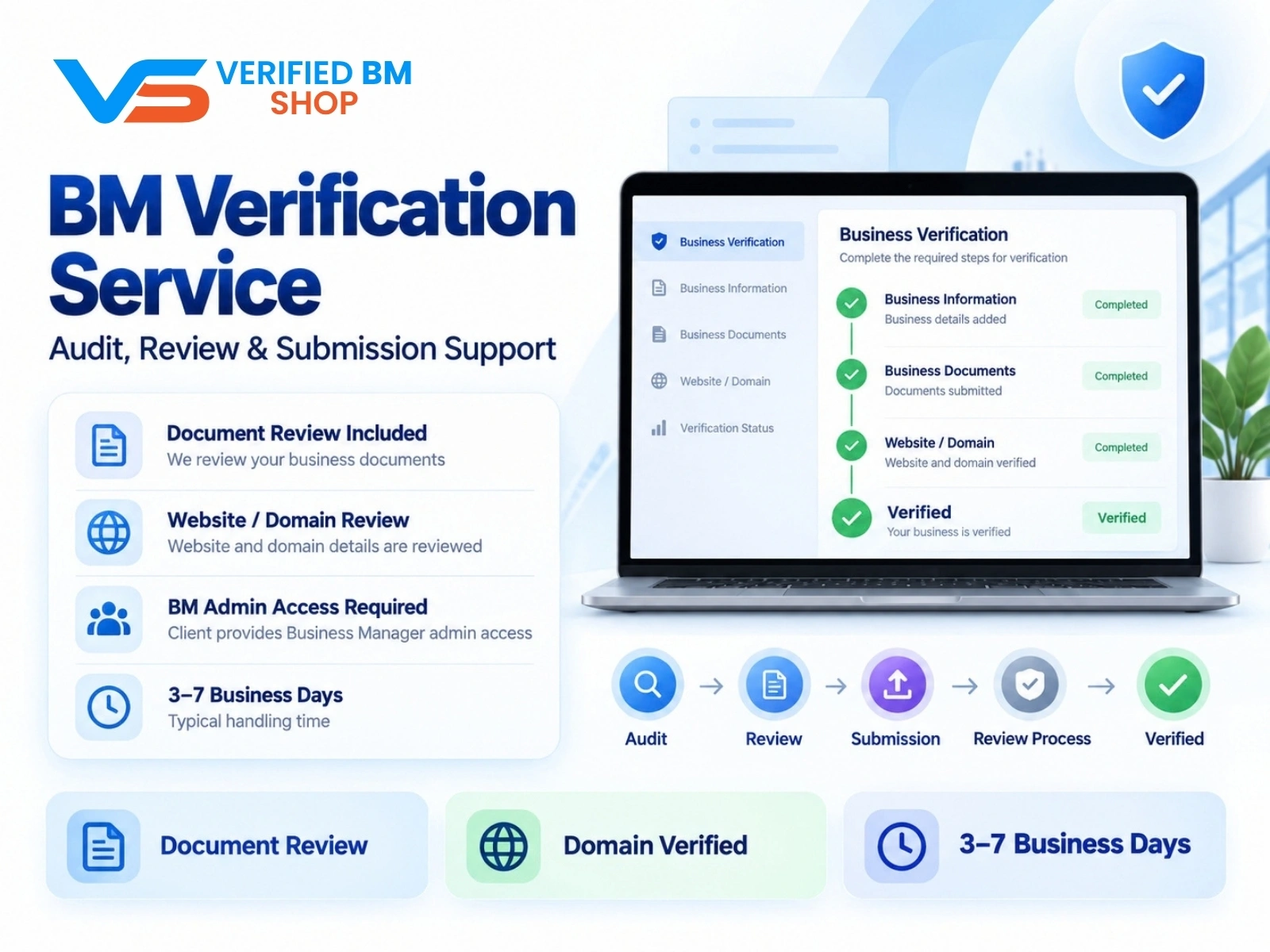
BM Verification Service
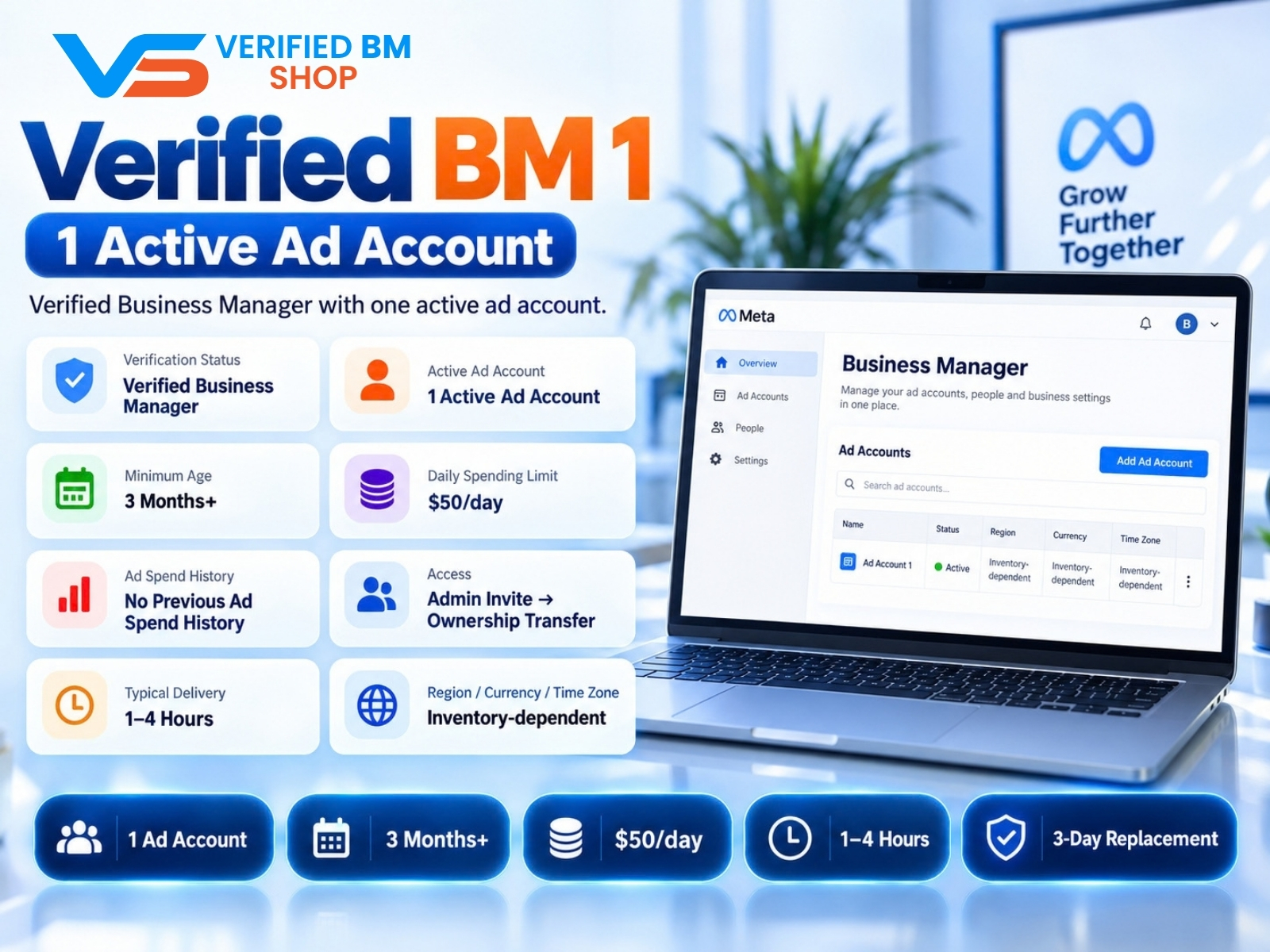
Verified BM 1 - Verified Meta Business Manager
Written by
Verified BM TeamThe VERIFIED BM SHOP team shares real-world experience in buying and selling verified Business Managers, WhatsApp API accounts and advertising platforms.
Comments (0)
No comments yet. Be the first to share your thoughts!
Leave a Comment
Your email will not be published. All comments are moderated.