
Quick Summary
Learn how performance advertising on Meta is measured, which metrics matter, and how to build reliable tracking, account, and business processes before scaling campaigns.
Performance advertising measures actions such as leads, purchases, app installs, or qualified enquiries. On Meta, results depend on the offer, creative, audience, landing page, tracking, and account setup working together.
The aim is not just to show an ad. Instead, the goal is to produce a useful business result at a cost the business can support. Clear goals, reliable data, and controlled tests help.
What Is Performance Advertising?
Paid promotion becomes performance advertising when it centres on trackable results. An advertiser sets a business goal, assigns a budget, and measures what happens after someone sees or interacts with an ad.
Results can include a completed checkout, submitted form, phone call, app install, or qualified conversation. Based on the chosen objective and optimisation settings, Meta may use available signals to reach people more likely to complete the selected event.
For example, an online store might optimise for purchases instead of link clicks. A service company may focus on qualified leads, while an app publisher may measure installs and events after install.
Performance Advertising vs. Brand Advertising
| Area | Performance advertising | Brand advertising |
|---|---|---|
| Main aim | Drive a measurable action | Build awareness and brand memory |
| Typical measures | CPA, ROAS, leads, sales, and conversion rate | Reach, recall, views, and brand lift |
| Time frame | Often judged through direct or near-term results | Often judged over a longer period |
| Creative approach | Clear offer and action prompt | Story, identity, and broad attention |
These approaches can support each other. Brand activity may create demand, while performance campaigns reach people who are ready to act.
How Performance Advertising Works on Meta
A Meta campaign can target different stages of the customer journey. Each stage needs the right message, audience plan, and next step.
- Awareness: Introduce the product, service, or problem to a relevant audience.
- Consideration: Give people reasons to visit a site, watch a video, send a message, or view a product.
- Conversion: Ask for a purchase, lead, registration, or other valuable event.
- Retention: Reconnect with customers through suitable offers and follow-up campaigns.
Meta’s auction and delivery systems use several signals to decide which ads may appear. These factors can change by placement, objective, campaign setup, and other auction conditions.
Budget, audience size, placements, optimisation events, creative, and the post-click experience can also change delivery and results. A low-cost click has little value if it does not lead to a useful business result.
Meta’s campaign objectives and performance goals can change over time and by account. Before launch, check the options in Ads Manager. Also consult Meta’s official advertising resources for current platform guidance.
The Main Performance Advertising Objectives
Leads
Lead campaigns can collect contact details through instant forms, websites, calls, or messages. If lead quality matters more than volume, add qualification questions and define a sales-ready lead.
Sales and conversions
Sales-focused campaigns can suit online stores and other businesses with a trackable purchase or conversion event. Reliable conversion signals may aid optimisation. Still, the data needed and the resulting performance vary by objective, event volume, account, and campaign setup.
Traffic
Traffic campaigns aim to bring people to a chosen destination. They may suit cases where visits are the main goal. However, link clicks alone do not show commercial success.
App promotion
App campaigns may focus on installs or actions inside an app. Connect the relevant mobile measurement tools and events before judging results after install.
Engagement and awareness
These goals can support video views, post interactions, reach, or other upper-funnel outcomes. They may aid later conversion activity, but assess them against the outcome chosen for the campaign.
The Core Elements of a High-Performing Campaign
Strong results usually come from several parts working together. Changing the audience alone will not fix a weak offer, misleading creative, or broken checkout.
- Creative: Show the product, problem, benefit, or proof quickly. Test different hooks, formats, and calls to action.
- Audience: Start with a sensible customer group. Broader or automated options may suit some accounts, but the right choice depends on the objective, data, offer, and campaign setup.
- Landing page: Match the page to the ad. Make the price, benefit, trust signals, and next step easy to find.
- Offer: Give people a clear reason to act. Avoid claims that conflict with Meta’s advertising policies or applicable law.
- Tracking: Record key events, such as ViewContent, Lead, AddToCart, InitiateCheckout, or Purchase, when they match the customer journey.
Creative often shapes the first response. The page, offer, and sales process then affect the final conversion. When possible, test one major variable at a time so each result gives a useful lesson.
Performance Advertising Metrics to Track
| Metric | What it shows | Useful question |
|---|---|---|
| CPM | Cost per 1,000 impressions | How costly is the available attention? |
| CTR | Rate of clicks or link clicks | Does the ad attract the intended response? |
| CPC | Average cost per click | What does each recorded visit cost? |
| Conversion rate | Share of visitors who convert | Does the page or offer persuade? |
| CPA | Cost per acquisition or action | Can the business afford each result? |
| ROAS | Tracked revenue divided by ad spend | How much reported revenue comes from each spend unit? |
| Frequency | Average times a person saw an ad | Could repeated exposure be reducing response? |
Read these metrics together. For example, a high CTR with a poor conversion rate may point to a landing-page, pricing, or message problem. A strong ROAS with little volume may still miss the wider growth target.
Why Conversion Tracking and Attribution Matter
Ad systems can use only the signals they receive. Missing, duplicated, delayed, or wrongly set events can make reported performance differ from actual business results.
Attribution also has limits. Different tools may assign a conversion to different sources because they use different windows, models, reporting times, and data rules.
Use platform reports as directional evidence. Then compare them with website analytics, CRM records, payment data, or sales records where suitable. Privacy choices, browser limits, blocked cookies, delayed events, and cross-device activity can reduce what Meta reports.
Meta Pixel and Conversions API: The Measurement Foundation
The Meta Pixel can send set-up website events from a browser to Meta. This remains subject to implementation, consent, browser limits, and applicable policies. Conversions API can send selected events from a business’s server or through a supported partner integration, subject to the related technical and policy needs.
Using browser and server-side event sources may improve event coverage in some setups. Results still depend on configuration, consent, data quality, and reliable deduplication. Duplicate events can distort reporting and optimisation.
Send only data you have a lawful basis to process. Keep event names, values, currency, and identifiers consistent. After launch, review event quality and match results in Events Manager.
For a technical overview, use Meta’s developer documentation. Our Meta Pixel and Conversions API setup guide covers the wider planning process without replacing technical or legal advice.
How Meta Business Manager Supports Performance Advertising
Meta may call its business-management structure a business portfolio, while many advertisers still use the term Business Manager. Available assets and permissions depend on the account.
A working structure may include:
- A business-management structure with business details where required.
- One or more ad accounts with suitable payment methods.
- Facebook Pages, Instagram accounts, Pixel or dataset assets, catalogs, domains, and apps where relevant.
- Named people, partners, and role-based access.
- A clear record of who owns each asset and who can change it.
Limit access to the work each person performs. Use two-factor authentication, remove former staff, and review partner access on a set schedule.
Our guide to Meta ad accounts, access, and billing explains the account layer in more detail.
What Business Verification Means for Advertisers
Where Meta requires business verification, it may ask for business information or supporting documents. The needs and review process vary by product, region, and account.
In some cases, Meta may require business verification before a business can use a certain product or feature. Check the requirements shown for the relevant account.
Verification does not guarantee ad approval, a higher return on ad spend, unlimited spending, or protection from enforcement. Keep business details accurate and consistent across records, domains, payment data, and account assets.
If you need help with the process, review the BM Verification Service or Meta’s current Business Help guidance.
How to Build a Safer Performance Advertising Setup
Account safety starts before the first campaign. Use accurate business information, follow advertising policies, and record changes so unusual account activity can be checked.
- Complete business and domain details with accurate information.
- Use payment methods that match the business and keep billing records current.
- Give each team member the least access needed for the task.
- Turn on two-factor authentication for people with business access.
- Check ad quality, landing-page claims, restricted products, and local legal duties.
- Keep backup records for creative, tracking IDs, domains, catalogs, and campaign settings.
- Where available, review Account Quality and any platform notices. Resolve relevant policy or billing issues before making major campaign changes.
A business-management structure can help organise assets and may relate to some product requirements. It remains subject to Meta’s policies and review systems.
Read the Verified BM Safety Guide before launching or scaling.
Performance Advertising Campaign Launch Checklist
- Define the business result and acceptable CPA or ROAS.
- Choose an objective and performance goal that match that result.
- Confirm the ad account, Page, Instagram account, domain, and payment method.
- Test the landing page on mobile and check the full conversion path.
- Verify Pixel and Conversions API events, values, currency, consent controls, and deduplication.
- Prepare several creative variations with clear, policy-safe claims.
- Set a budget that allows useful testing without risking cash flow.
- Launch with a review plan for spend, delivery, event quality, and customer feedback.
Common Mistakes That Damage Performance or Account Stability
Many campaigns underperform because the measurement or business process is weak, not because the auction is broken.
- Optimising for cheap clicks when the real goal is profitable sales.
- Changing budgets, audiences, and creative at the same time.
- Sending traffic to a slow, unclear, or mismatched landing page.
- Using exaggerated claims, prohibited content, or misleading before-and-after images.
- Launching without checking event duplication or purchase values.
- Sharing passwords or giving every worker full business control.
- Adding unfamiliar payment methods or making large changes without a clear record.
- Assuming verification removes the need to follow policy.
How to Scale Performance Advertising Responsibly
Scale only after you can explain what seems to drive results. Start with stable tracking, a sound offer, and a repeatable creative process.
Raise spend in measured steps, watch CPA and conversion quality, and allow time for delivery to adjust. If results fall, check tracking, frequency, creative fatigue, stock, site speed, and payment status before making large changes.
Agencies and e-commerce teams may also need separate assets, clear ownership, and controlled access for each client or brand. Review the Verified BM category if your operation needs a business setup that fits its asset and access requirements.
No provider can promise approval or unrestricted delivery. Assess each service against your own compliance, ownership, and access requirements.
Final Takeaway: Build the Measurement and Account Infrastructure First
Performance advertising works best when the campaign goal, offer, creative, landing page, tracking, and account structure support the same business result.
Meta’s delivery systems may help find people likely to respond, but they cannot fix poor data, weak pages, policy violations, or unclear ownership. Build the foundation first. Then test with care and scale from evidence.
Frequently Asked Questions
Quick answers to the questions buyers ask most.
What is performance advertising on Meta?
Which Meta campaign objective should I choose for performance advertising?
How do I measure whether a Meta performance advertising campaign is working?
Do I need to verify my business before running performance advertising on Meta?
How this helps verified BM buyers
Apply this guidance when buying verified Business Managers or WhatsApp Business API assets to reduce policy risk, improve account stability, and scale campaigns with cleaner operational workflows.
Next steps: compare products in the Shop, review implementation details in FAQ, and contact support from the Contact page.
Recommended for You
Hand-picked from our shop — delivered fast after payment.
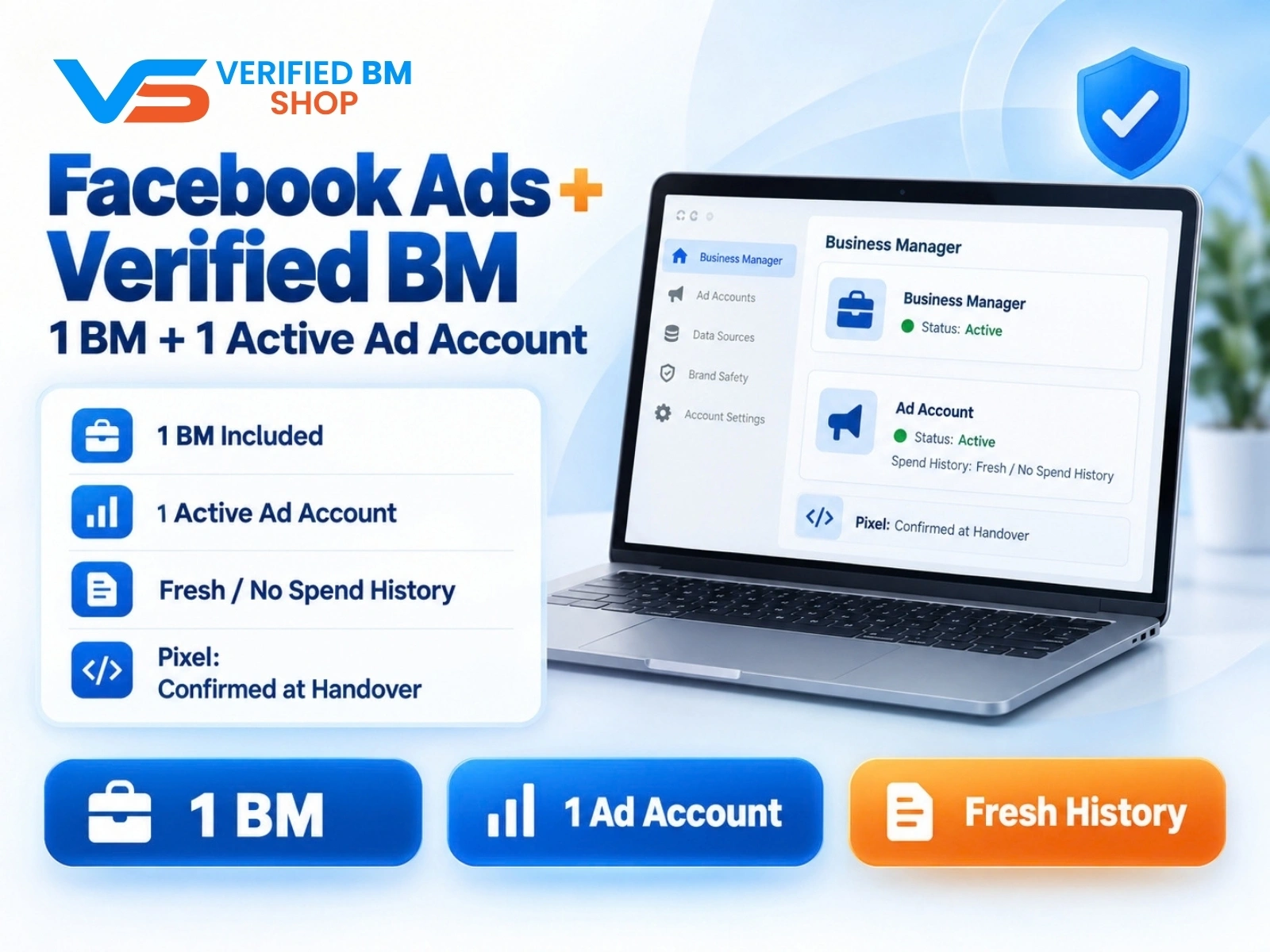
Facebook Ads Account + Verified BM Bundle
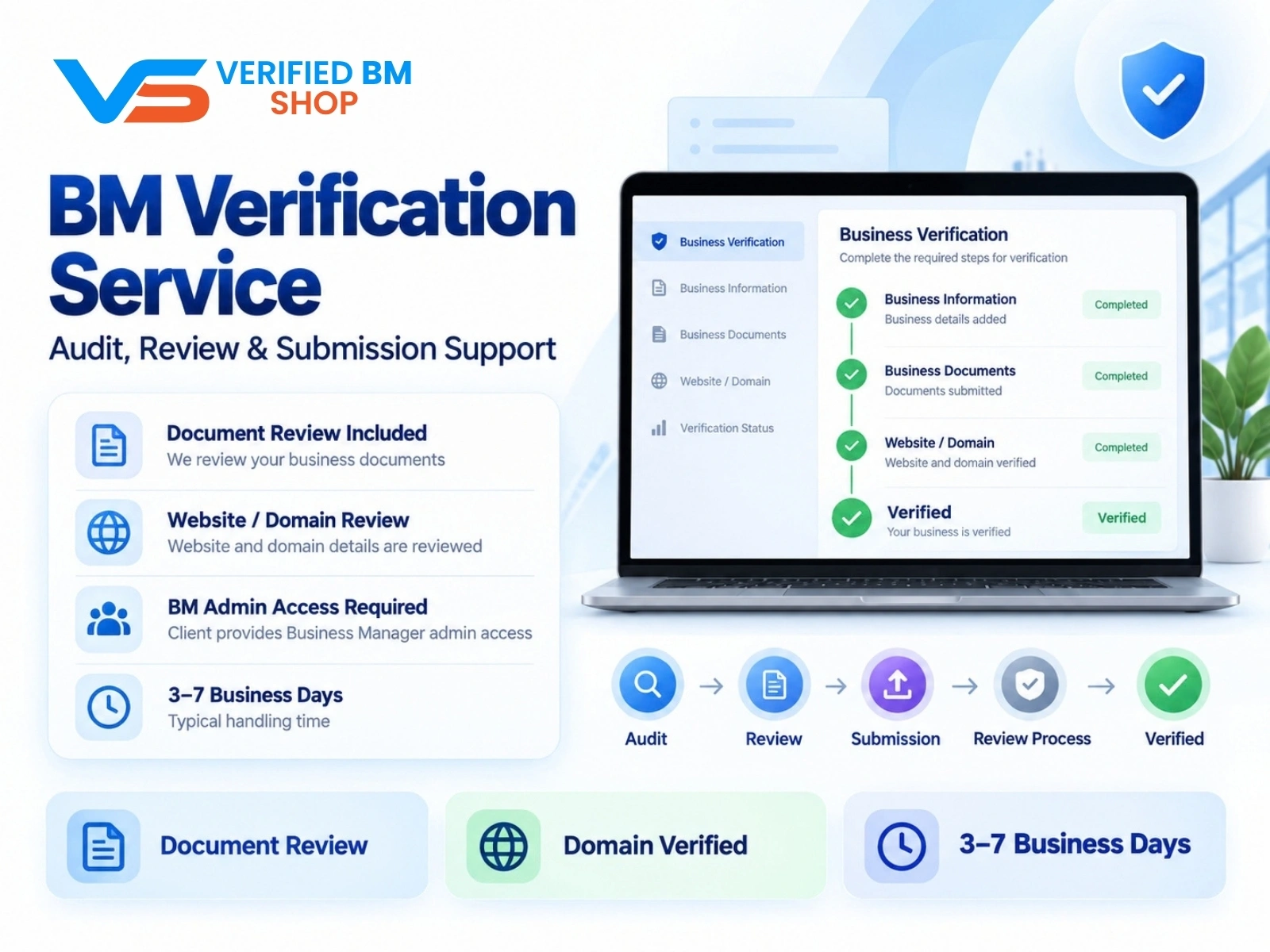
Meta BM Verification Service by VERIFIED BM SHOP
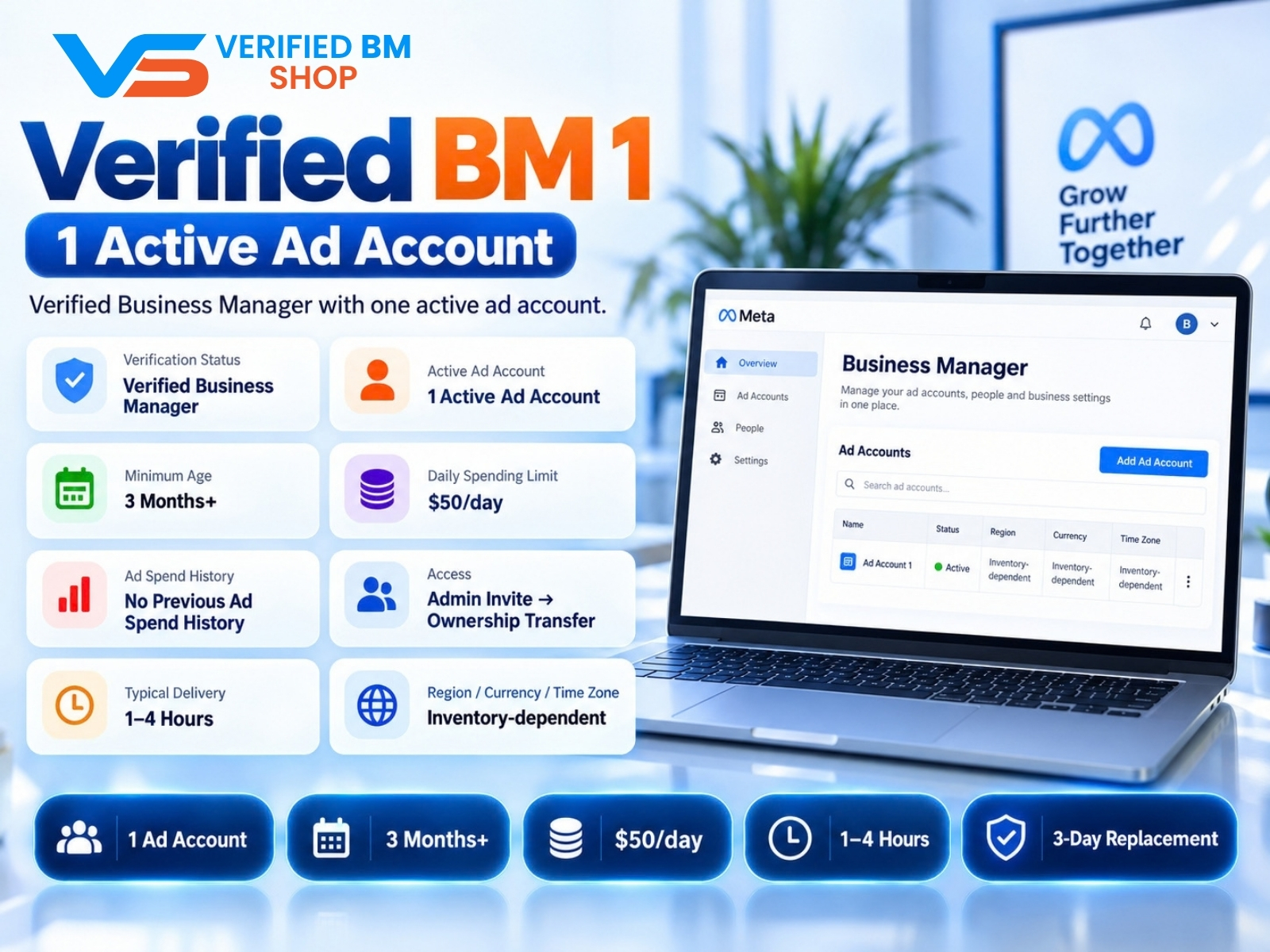
Verified BM 1 - Verified Meta Business Manager

Written by
Verified BM TeamThe VERIFIED BM SHOP editorial team shares real-world experience in buying and selling verified Business Managers, WhatsApp API accounts and advertising platforms.
Comments (0)
No comments yet. Be the first to share your thoughts!
Leave a Comment
Your email will not be published. All comments are moderated.