
Quick Summary
Find out why Meta Ads CPC rises and how to diagnose costs through better creative, audience testing, campaign settings, measurement, and account management.
A high CPC on Meta Ads may point to a low click-through rate, costly competition, poor audience fit, limited placements, or restrictive campaign settings. To verify a business, you submit business information for Meta's review. Any access or features that follow depend on Meta's current eligibility rules and the account's status. Verification does not fix creative, targeting, measurement, or auction issues.
High CPC on Meta Ads: What It Means
Cost per click, or CPC, shows the amount spent for each click counted by the chosen metric. Results vary with the click type and reporting settings.
| Metric | What it measures | Useful for |
|---|---|---|
| Link CPC | Spend divided by link clicks | Assessing clicks intended to open a website or destination |
| Outbound CPC | Spend divided by outbound clicks | Assessing clicks that leave Meta platforms |
| CPC (all) | Spend divided by all counted clicks | Including interactions such as reactions, profile taps, and other clicks |
| CPM | Spend per 1,000 impressions | Assessing the cost of impressions |
| CTR | Clicks divided by impressions | Assessing how often people click after seeing an ad |
| CPA | Spend divided by reported conversions | Assessing the cost of leads, sales, or other selected results |
With aligned units, CPC is about CPM divided by CTR for a consistent click metric. If CPM rises but CTR stays similar, higher impression costs may drive the change. By contrast, a stable CPM with a falling CTR may signal a problem with the ad, offer, or audience fit.
Is Your CPC Actually High?
No single CPC target fits every Meta campaign. Country, industry, audience, objective, placement, offer, season, attribution settings, and funnel stage all affect costs.
For example, a prospecting campaign for a high-priced service needs a different benchmark from a retargeting campaign for a low-priced product. Use similar campaigns and time periods for comparison instead of a broad online benchmark.
Use the right comparison
- Match the objective, optimization event, country, placement approach, and attribution setting.
- Look at link CPC and outbound CPC as separate measures.
- Alongside CPC, check CTR, CPM, frequency, landing-page views, and conversion rate.
- Allow enough spend and impressions to limit the effect of short-term variation.
- Compare recent periods with an equal earlier period, not with one unusually good day.
A lower CPC does not always mean better performance. Cheap clicks may bring weak traffic, while a higher CPC can still produce an efficient CPA and strong return. Judge the full path from impression to qualified conversion.
The Main Reasons Meta Ad CPC Increases
Low click-through rate
When fewer impressions lead to clicks, the campaign needs more impressions for the same traffic volume. As a result, CPC may rise, especially when the ad does not suit the audience.
High auction competition
Competition may grow during holidays, sales periods, elections, or busy buying seasons. Valuable locations and narrowly defined business audiences may also draw more demand.
Narrow targeting
A small or tightly restricted audience offers fewer chances to find suitable impressions. Tight rules for age, location, interest, device, or placement can also make results less like broader demand.
Weak creative or offer fit
Polished design cannot make an unclear offer clear. People should quickly understand what you sell, who it serves, and what to do next.
Limited placements
Delivery to one placement removes other chances to gain impressions. Still, a cheaper placement is not always better if it brings poor-quality traffic or leads.
Ad fatigue
As frequency rises, the same people may see the same message again and again. CTR may fall and engagement may weaken, though the effect depends on the audience, creative, objective, and campaign length.
Learning and setup problems
Frequent edits, limited audience or conversion data, and a mismatched optimization event may affect delivery. They may also make results harder to read, depending on the campaign setup. Tracking errors, split budgets, or an unsuitable conversion location can cause similar uncertainty.
How the Meta Ad Auction Can Affect CPC
Meta describes ad delivery as an auction. Bid, estimated action rate, and ad quality can affect delivery. Check current official guidance for the relevant objective and settings, since terms and available controls may change.
Its delivery system uses estimated action-rate and ad-quality signals. However, the exact inputs and weighting are private and may vary by campaign type. These signals are not a public, fixed CPC formula.
Therefore, a higher bid does not always mean a lower CPC or guaranteed delivery. Auction conditions, audience response, creative, and campaign settings all shape the result.
Read Meta's official advertising guidance for current information about campaign delivery and auction controls.
How to Diagnose High CPC in Ads Manager
Begin at campaign, ad set, and ad level. An account-wide average can hide a weak audience, placement, creative, or conversion path.
- Choose a date range with enough delivery for a fair comparison.
- Customize columns to include amount spent, impressions, CPM, link clicks, outbound clicks, link CTR, outbound CTR, frequency, landing-page views, and conversions.
- Break down results by placement, age, gender, region, device, and platform when the breakdown fits the campaign.
- Look at stronger and weaker ads within the same ad set.
- Check delivery and account-status areas for learning, delivery, rejection, review, or restriction notices shown for that account and campaign.
- Before deciding that traffic cost alone is the problem, review the landing page and conversion data.
High CPM with a stable CTR suggests that impression costs may be the main issue. Stable CPM with a falling CTR points more to the message, creative, offer, or audience fit. When CTR is good but landing-page views are weak, slow loading, broken links, or an ad-to-page mismatch may be the cause.
Use a Meta Ads access audit when results differ across users, assets, pixels, or ad accounts. Wrong access or missing assets can delay checks and create setup errors.
Improve Ad Creative, Copy, and Click-Through Rate
Test one clear change at a time. If you change the video, headline, audience, and offer together, the cause of the result becomes hard to identify.
Make the first seconds count
Show the product, problem, or outcome early. Choose a clear visual that works without sound, since some people scroll fast or watch with audio off.
Match the message to the audience
Cold audiences need a clear reason to care. Warm audiences may need proof, a comparison, an answer to an objection, or a reminder of the next step.
Test practical variations
- Use one version about the customer problem and another about the result.
- Compare a short benefit-led headline with a specific product statement.
- Test customer proof, demonstrations, creator-style video, and simple product images.
- State price, eligibility, timing, or key limits when those details qualify the click.
- Keep claims accurate and avoid wording that suggests personal traits or guaranteed outcomes.
Do not pursue CTR with a misleading ad. A high click rate followed by weak engagement or low conversion can waste spend and harm the user experience.
Test Audiences, Placements, and Campaign Settings
Give the system room to find demand
Test a broad audience against a more focused one when your offer can serve both. Remove only restrictions that you do not need for legal, geographic, privacy, or business reasons.
Keep exclusions clear. Overlapping ad sets may compete for some of the same people and make results harder to read, although the effect depends on campaign structure and auction conditions.
Review placements with data
Choose placements that suit the creative and objective. If automatic or Advantage+ placements are available for your campaign, compare them with a controlled placement group when that test is practical.
Do not remove a placement just because its CPC is low or high. Instead, check outbound clicks, landing-page views, leads, purchases, and lead quality by placement.
Match the objective to the real goal
A traffic campaign may produce cheap visits but fail to find people most likely to buy. If event data is reliable, test an objective and optimization event closer to the business result.
Confirm that events fire correctly before changing optimization. Meta's Pixel and Conversions API setup guide can help you review the measurement layer.
Review Budget, Bidding, and Optimization Events
A small budget compared with the audience, conversion event, and test length may produce little data. It can also make performance hard to judge. Raise spend in measured steps instead of making large changes after only a few hours.
Frequent or large budget changes can make performance harder to compare and may affect delivery, depending on the campaign setup. Let a test run long enough to gather useful data unless the ad has a clear policy, brand, or tracking problem.
Check these controls
- Use the correct campaign objective and conversion location.
- Confirm that the optimization event matches the result you want.
- Review bid strategy and cost controls when delivery is limited.
- Check account spending limits, payment status, and schedule settings.
- Keep the ad set count manageable so budget and data do not become needlessly split.
A cost cap or bid cap can give more control, but it may also limit delivery. Compare controlled bidding with an available automatic option when a campaign cannot spend or produces too little data for a useful test.
Does Meta Business Manager Verification Lower CPC?
No. Business verification does not promise a lower CPC, stronger auction performance, better CTR, or cheaper impressions.
Business verification means submitting business information for Meta's review. Any resulting access or features depend on Meta's current eligibility rules and the account's status. Campaign performance depends on auction conditions, audience, creative, offer, measurement quality, and campaign or account settings.
Keep these issues separate when reviewing account options. You can compare the practical differences in verified and unverified Business Managers without treating verification as a performance shortcut.
How Account Setup and Security Can Protect Campaign Continuity
Good account practices may not cut auction costs, but they can help prevent avoidable breaks. Payment failures, unclear ownership, missing permissions, and sudden access changes can stop delivery or delay testing.
- Use accurate business and payment details.
- Give each collaborator the lowest access level needed for the task.
- Turn on two-factor authentication for people with business access.
- Keep backup admins and asset records current.
- Review billing, domains, pages, pixels, catalogs, and ad accounts on a set schedule.
- Follow Meta advertising rules and avoid misleading claims or policy evasion.
For account structure and billing checks, see this guide to Meta ad accounts, access, and billing. A sound setup supports testing, but it cannot replace better ads or a stronger offer.
A Step-by-Step Plan to Reduce High CPC
- Confirm the metric. Choose link CPC or outbound CPC based on the traffic question.
- Set a fair baseline. Compare similar dates, audiences, objectives, and placements.
- Find the weak signal. Check CPM, CTR, frequency, landing-page views, and conversion rate.
- Build two or three creative tests. Change the hook, format, proof, or offer angle.
- Test audience breadth. Compare focused targeting with a broader audience where suitable.
- Review placements. Keep placements that produce qualified traffic, not just cheap clicks.
- Check tracking and optimization. Fix event errors before judging campaign quality.
- Change one major variable. Keep a simple test log with spend, dates, and results.
- Scale in small steps. Avoid several major edits at once when delivery is stable.
High CPC Troubleshooting Checklist
- Is the CPC metric tied to the business goal?
- Did CPM rise, did CTR fall, or did both change?
- Is frequency rising while engagement declines?
- Does the ad explain the offer within a few seconds?
- Are the audience and location right for the test?
- Are placements restricted without a performance or business reason?
- Does the landing page load, work on mobile, and match the ad?
- Is the optimization event firing and receiving useful data?
- Are payment, access, domain, and asset settings correct?
- Did recent edits affect delivery or make the comparison less reliable?
When to Contact Meta Support
Contact Meta if delivery stops without a clear reason, billing fails despite valid payment details, an asset seems wrongly restricted, or a review request needs account-specific handling.
Before opening a case, save screenshots, ad IDs, account IDs, dates, payment records, and exact error text. Use the official Meta technical support contact guide to organise the request.
Do not create duplicate accounts, hide business details, or use misleading workarounds while waiting. Such actions can make access and review problems harder to solve.
Final Takeaway
High CPC is usually a performance signal, not proof that a Business Manager lacks verification. Start with the metric, then isolate CPM, CTR, audience cost, placement quality, creative fatigue, tracking, and campaign setup.
Test with care, keep account access secure, and judge success by qualified conversions rather than cheap clicks alone. If you need a structured Business Manager for managing advertising assets, review available options based on access, compliance, and operational needs—not on a promise of lower CPC.
Official Sources
Frequently Asked Questions
Quick answers to the questions buyers ask most.
What causes a high CPC on Meta Ads?
A high cost per click can result from strong competition in your target audience, low ad quality or engagement, a narrow audience, expensive placements, or a mismatch between the ad and the landing page. Meta’s auction considers factors such as bid, estimated action rate, and ad quality, so a higher budget alone does not guarantee cheaper clicks.
How can I lower CPC on Meta Ads without reducing my budget?
Test new hooks, formats, images, videos, headlines, and calls to action to improve engagement and relevance. You can also compare broader targeting, placements, and campaign objectives, then shift spend toward the combinations producing useful results rather than optimizing for clicks alone.
Does a small or narrow audience increase Meta Ads CPC?
It can. A narrow audience gives the auction fewer people to reach and may increase competition for available impressions, especially when several advertisers target the same users. Test a broader audience while keeping the targeting relevant to your offer.
Can ad placement affect CPC on Facebook and Instagram?
Yes. Costs and user behavior can differ across Feed, Stories, Reels, and other placements. Use placements that match your creative, review performance by placement, and avoid judging a placement only by CPC if another placement generates better conversions or leads.
Why is my Meta Ads CPC high after launching a new campaign?
New campaigns may have limited performance data while Meta’s delivery system learns which people are most likely to take the selected action. Avoid making frequent major edits during this period, and evaluate CPC alongside click-through rate, conversion rate, and cost per result.
Is a high CPC always a problem in Meta advertising?
No. CPC should be judged against the value of the traffic and the campaign goal. A higher CPC may still be worthwhile if the clicks produce qualified leads, purchases, or profitable customers, while a low CPC is not useful if the traffic does not convert.
Does Meta business verification lower CPC?
Business verification is a business and account requirement that may be needed for certain Meta products, features, or access checks; it is not a direct CPC-reduction setting. To address expensive clicks, focus on auction competitiveness, audience, creative quality, placements, and conversion tracking, while completing verification when Meta requests it.
How this helps verified BM buyers
Apply this guidance when buying verified Business Managers or WhatsApp Business API assets to reduce policy risk, improve account stability, and scale campaigns with cleaner operational workflows.
Compare Verified BM options · Next steps: learn what a verified bm is, compare products in the Shop, review implementation details in FAQ, and contact support from the Contact page.
Recommended for You
Hand-picked from our shop — delivered fast after payment.
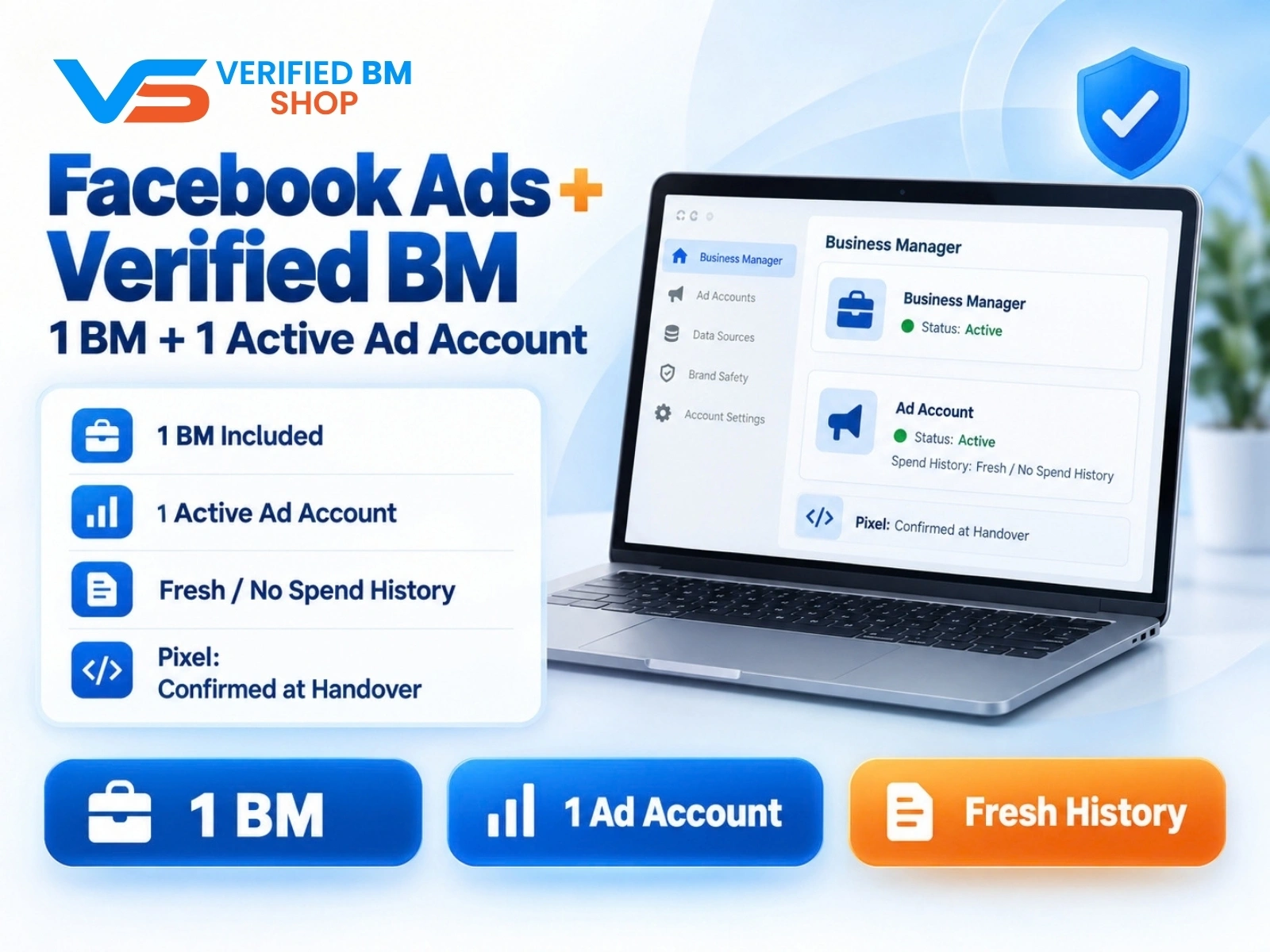
Facebook Ads Account + Verified BM Bundle
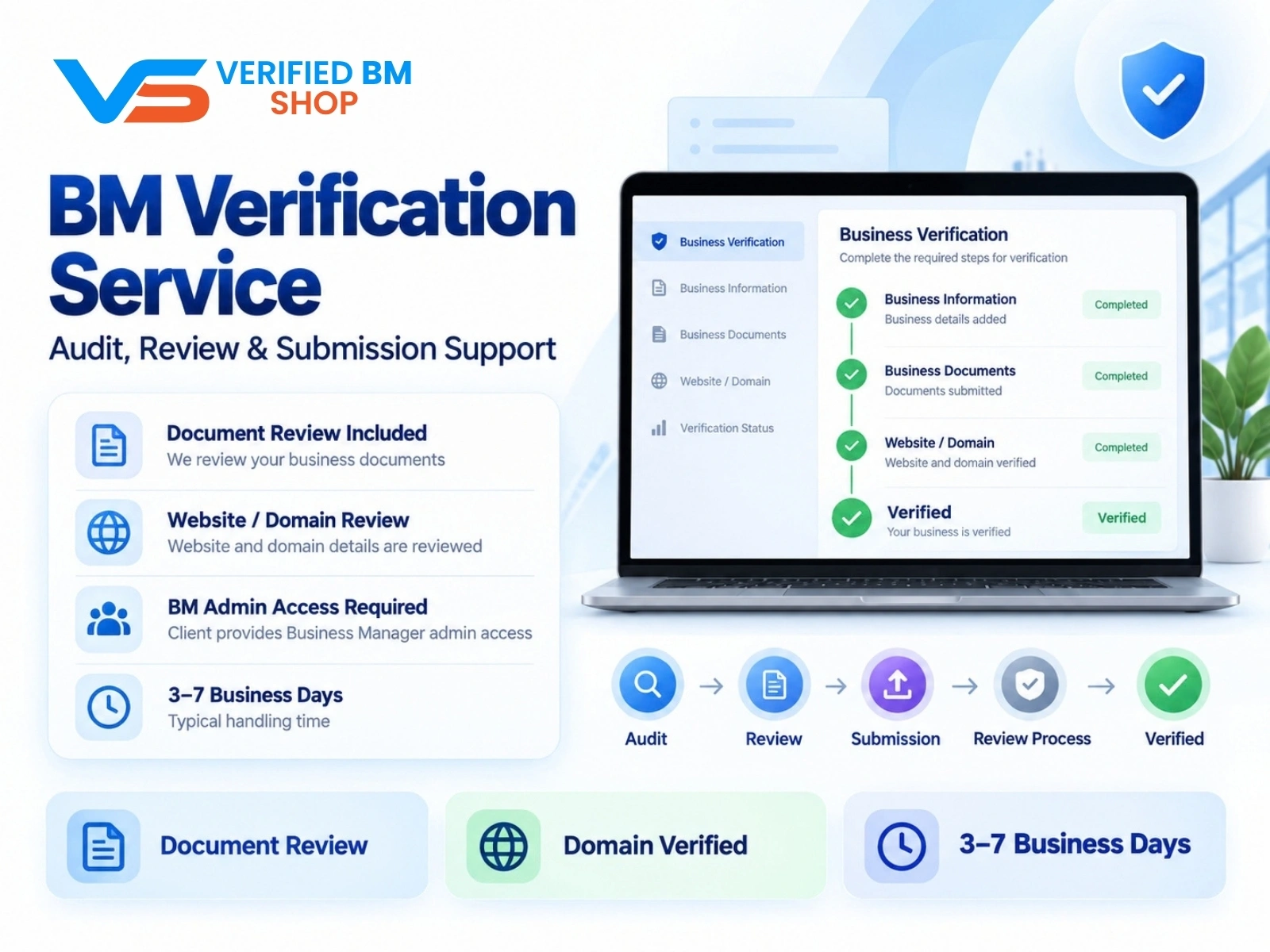
Meta BM Verification Service by VERIFIED BM SHOP
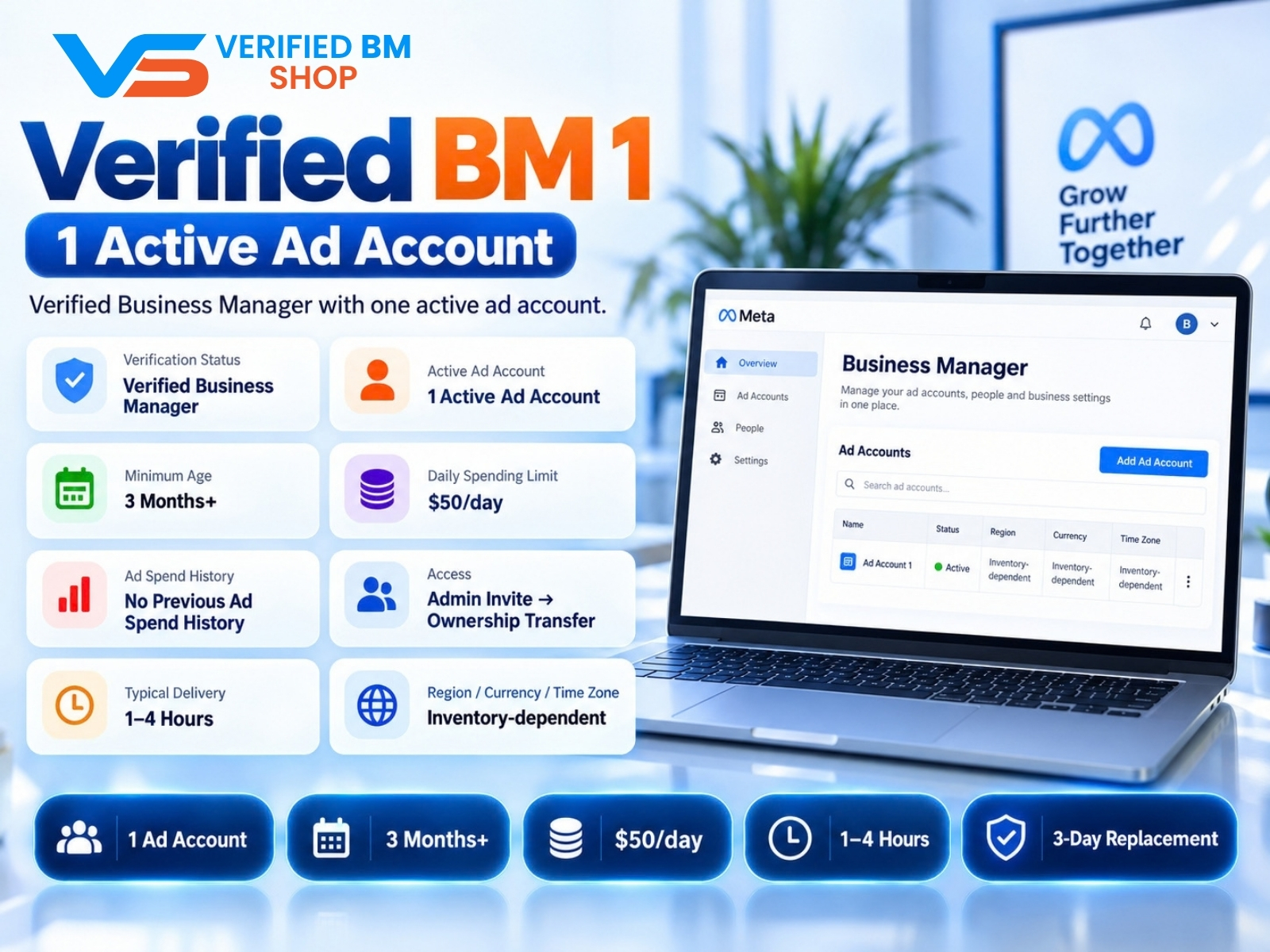
Verified BM 1 - Verified Meta Business Manager

Written by
Verified BM TeamThe VERIFIED BM SHOP editorial team shares real-world experience in buying and selling verified Business Managers, WhatsApp API accounts and advertising platforms.
Comments (0)
No comments yet. Be the first to share your thoughts!
Leave a Comment
Your email will not be published. All comments are moderated.